


World Cup workers use global spotlight to push for contracts and protections
Hospitality workers across several World Cup host cities are increasingly using the tournament as leverage in contract fights, arguing that workers who make the event possible deserve a fair share of the economic benefits it brings.
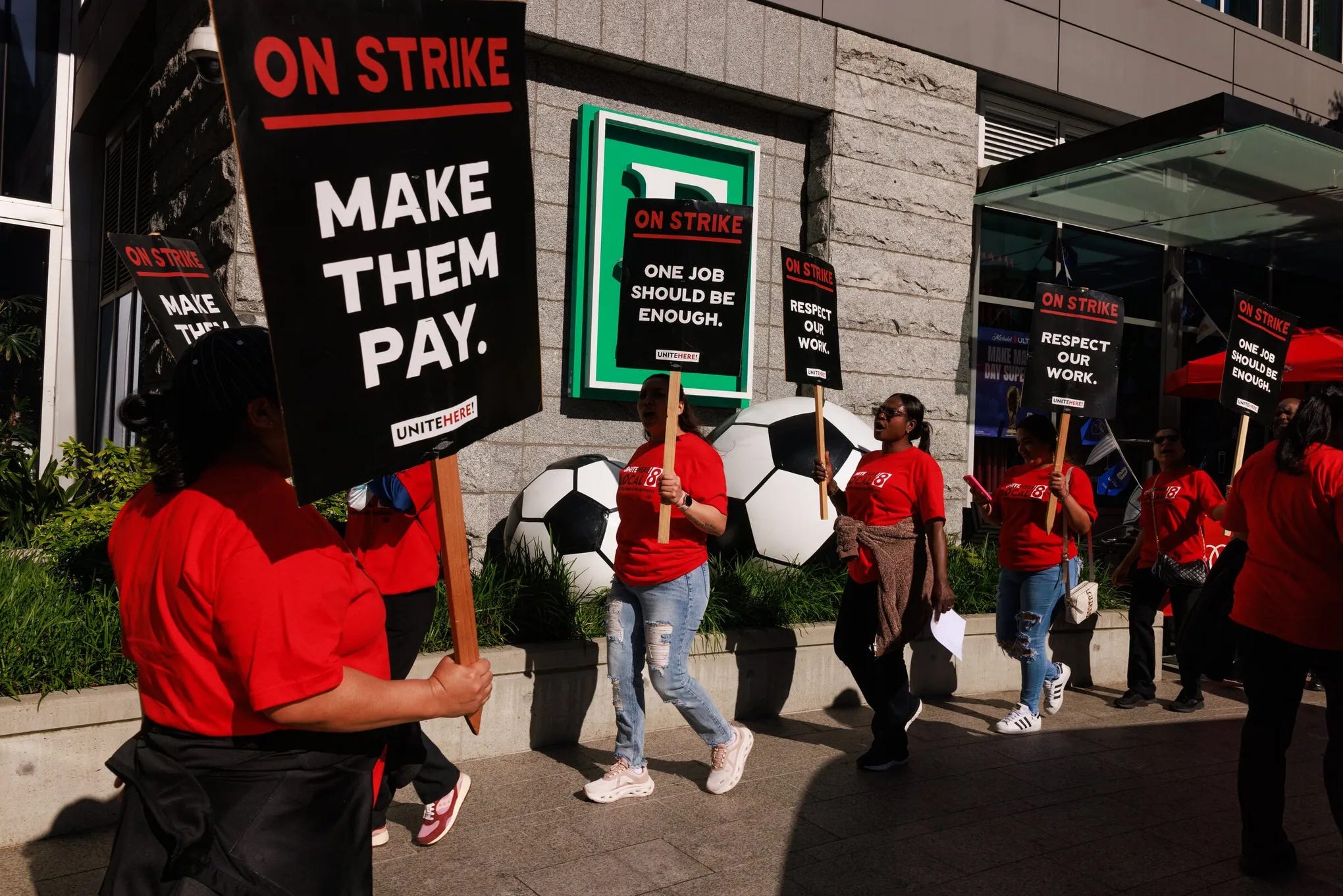
The most visible action this week came in Seattle, where members of UNITE HERE Local 8 launched an indefinite strike at the Embassy Suites Pioneer Square, minutes from Lumen Field. Workers are demanding higher wages, year-round healthcare coverage, staffing improvements, and protections against ICE enforcement actions that could target immigrant workers.
In Philadelphia, workers at the Sheraton Philadelphia Downtown walked off this morning on strike. Members of UNITE HERE Local 274 are demanding a minimum of $30 per hour and a daily quota of 15 rooms for housekeeping workers. In addition to the World Cup games in the city, the strike is timed to coincide with America 250 events underway.
The strikes follow a similar fight in Los Angeles, where roughly 2,000 stadium workers represented by UNITE HERE Local 11 authorized a strike ahead of World Cup events before reaching a tentative agreement. Workers there also demanded protections related to immigration enforcement and maintained the right to strike if ICE presence threatens workers.
Additionally, hospitality workers in Houston and other host cities have raised similar demands as the tournament has begun. Many argue that while politicians and corporations celebrate the economic benefits of hosting major sporting events, the workers who clean the rooms, prepare the food, and staff the venues are too often left behind.
The disputes also reflect a distinctly American reality surrounding this year’s tournament. As the federal government expands immigration enforcement, many workers who help make these events possible are simultaneously demanding protection from the same agencies being deployed to secure them. For unions, the World Cup has become a bargaining opportunity and a stage on which workers can make their demands visible to the world.
ICE rewrites detention rules after lobbying from private prison giant
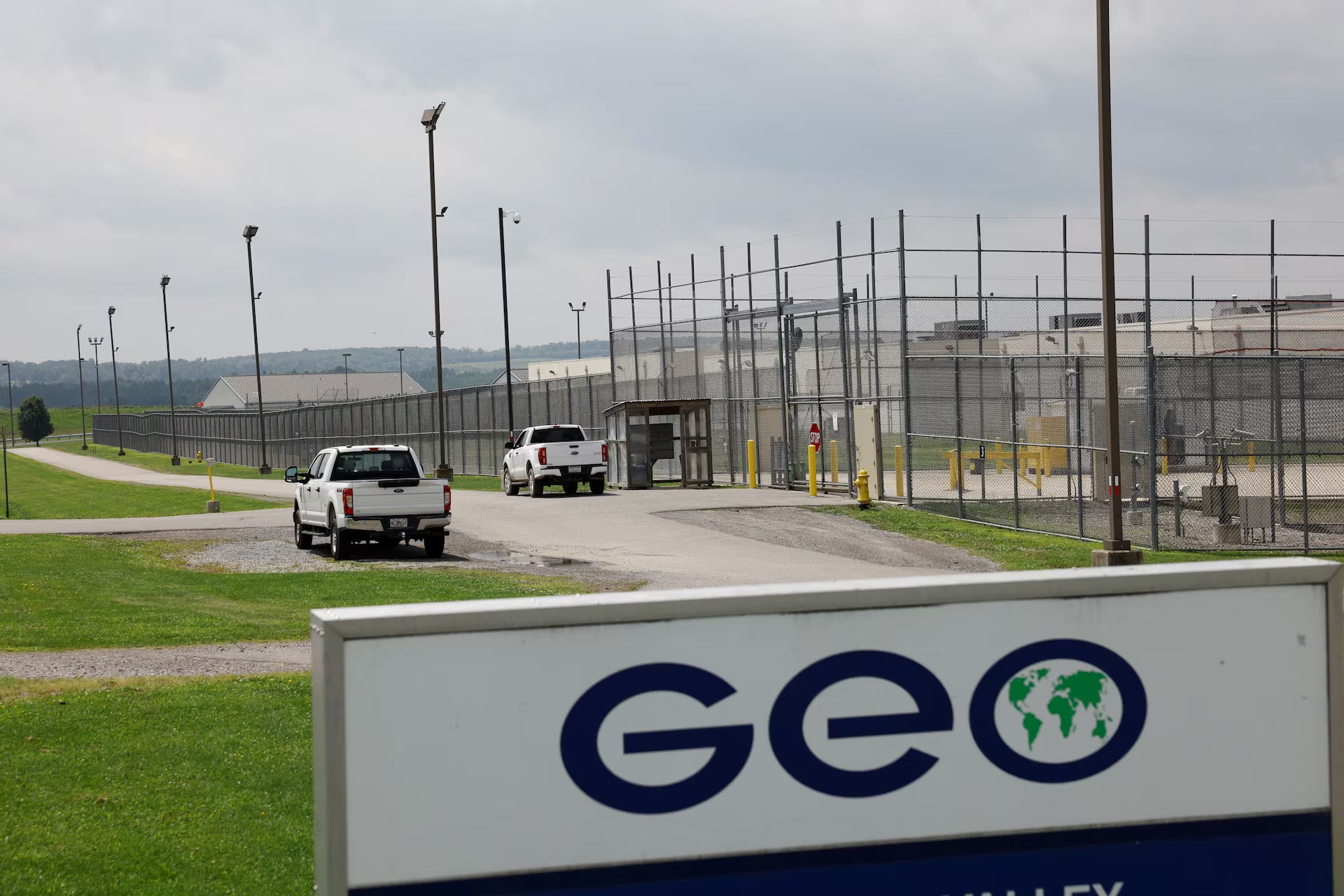
A Washington Post investigation revealed this week that ICE revised its detention standards after direct outreach from GEO Group, the largest private contractor operating immigrant detention facilities in the United States. The new rules explicitly state that detainees are not workers and are therefore not entitled to protections under local or state labor laws.
The change arrives as GEO Group faces multiple lawsuits alleging that immigrant detainees were coerced into working for as little as $1 per day while performing essential jobs inside detention centers. According to the Post, GEO Group specifically sought language that could strengthen its defense against those lawsuits. ICE adopted the revisions earlier this week.
The issue is particularly significant because more than 90% of ICE detention beds are operated by private companies, with GEO Group serving as one of the largest beneficiaries of the federal government’s expanding detention system. The company receives billions in government contracts and has deep ties to the administration. Both border czar Tom Homan and ICE Acting Director David Venturella previously worked for GEO Group. Since Trump took office in 2025, DHS funding has ballooned to $191 billion – with for-profit detention centers racking in billions while lobbying to continue expanding the deportation machine.
The rule change comes amid growing reports of labor actions and protests inside detention facilities themselves. At Delaney Hall in Newark, detainees launched labor and hunger strikes over conditions, while outside supporters have maintained regular demonstrations demanding improved treatment and release of detainees. Reports of unsanitary conditions, sexual assault, medical neglect, abuse, and labor exploitation have generated increasing scrutiny of the detention system.
UAW convention votes to divest from Israel
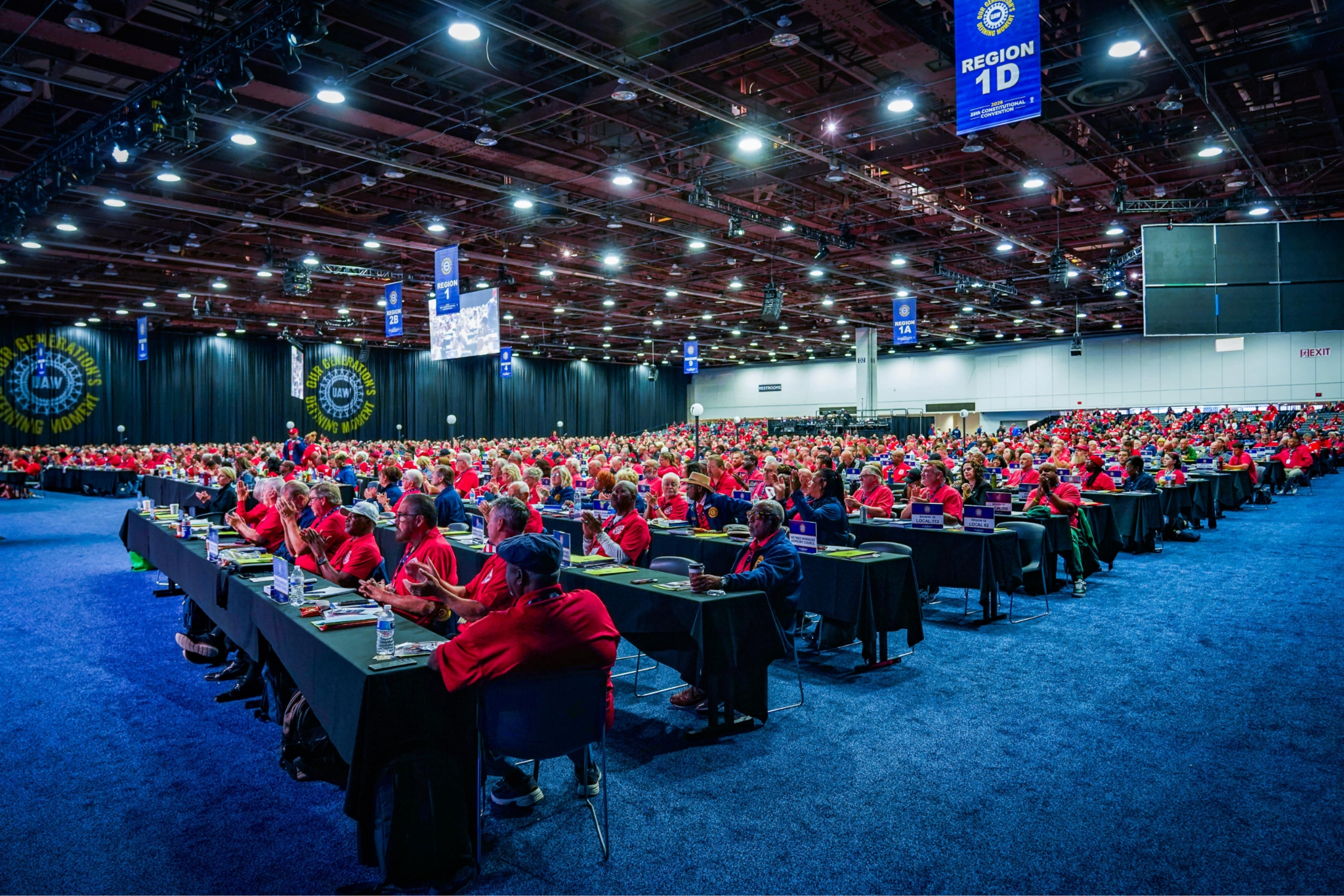
Delegates at the UAW’s 39th Constitutional Convention voted this week to divest union funds from Israeli bonds, marking a historic shift in the union’s approach to Palestinian liberation and one of the most significant labor convention votes on the issue since the genocide in Gaza began in 2023. The measure follows years of organizing by members within the union and reflects a broader transformation in labor’s politics on the issue. The vote comes as the Israeli government continues bombing Lebanon, endangering the fragile regional ceasefire between the U.S. and Iran.
The vote builds on a trend that has accelerated across the labor movement over the last three years. The UAW was among the first major unions to call for a ceasefire in Gaza in 2023. Since then, dozens of unions endorsed ceasefire resolutions, condemned the genocide in Gaza, or called for restrictions on U.S. weapons shipments to Israel. The convention vote goes a step further by divesting union funds directly, mainstreaming the tactic and demand on other major institutions.
For many delegates, the comparison to the anti-apartheid movement came to mind, when unions and pension funds divested from South Africa as part of a broader international campaign. In 1978, the UAW voted to divest from South African companies to protest against the apartheid system. This was a breakthrough moment that catalyzed the broader labor movement to follow suit, condemning the apartheid regime and leading to further divestment. Ultimately, statewide public pension funds divested in the 1980s, creating a major blow against the regime and legitimizing the growing international movement against the racist system.
Bezos says AI will create jobs while Amazon keeps cutting them
Speaking at the VivaTech conference in Paris, Jeff Bezos argued that artificial intelligence will ultimately create more jobs than it destroys, predicting that AI could even produce a future labor shortage rather than mass unemployment. Rather than backing up his arguments with evidence-based claims or even corporate commitments from the Amazon CEO, he made vague allusions that AI would make everyone’s entrepreneurial dreams come true.
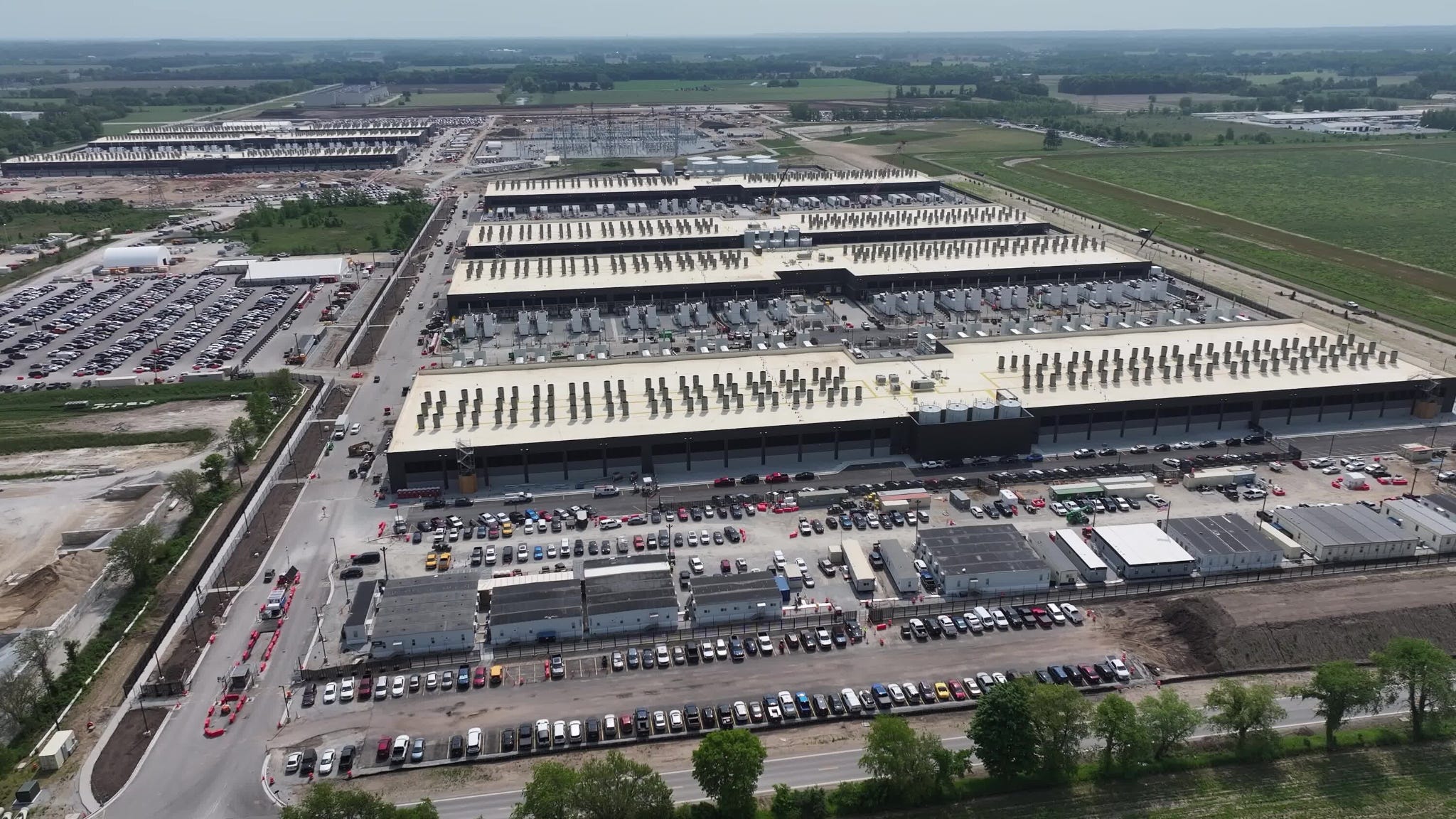
The comments come at a moment when many workers are experiencing the opposite reality, including at Amazon. Earlier this year, Amazon eliminated roughly 16,000 jobs in January following 14,000 job cuts in October – while continuing one of the largest AI investment campaigns in corporate history. Amazon, Microsoft, Alphabet, and Meta have collectively committed over $700 billion toward AI infrastructure, data centers, chips, and automation systems in 2026. Amazon alone is expected to spend close to $200 billion on AI-related infrastructure and expansion. The far larger logistics workforce for the warehouse giant isn’t safe either, threatening over 1 million logistics jobs in the U.S.. Amazon warehouses have been introducing robotics and automation across newer facilities for years, attempting to remove as many workers as possible to drive down costs.
Corporate executives continue to insist that AI will create new opportunities while simultaneously announcing layoffs, restructuring departments, and demanding increased use of AI tools from existing employees. Across tech, nearly 120,000 jobs have already been cut this year as companies redirect resources toward AI investments and seek higher productivity from smaller workforces.
Supporters of AI argue that technological revolutions have historically created new jobs even as they eliminate others. Workers do not experience those transitions as abstract economic theories. They experience them as layoffs, wage pressure, and increased workloads. AI has not resulted in the promises of new job creation, but it has made corporations and the already rich hundreds of billions of dollars – including making the first trillionaire. Workers are being asked to bear the costs and uncertainty of that transition while corporations and investors chase the potential rewards.
BONUS ROUND
Bring it to the shop!
The Pickets & Power Bulletin covers the biggest stories impacting all working people today. Share these stories with your union siblings, coworkers, friends, and family. Read it together, discuss, and take lessons to strengthen your own fights. When we fight, we win – and when we fight, we learn. Tell us in the comments about campaigns you think we should include in our next bulletin!