


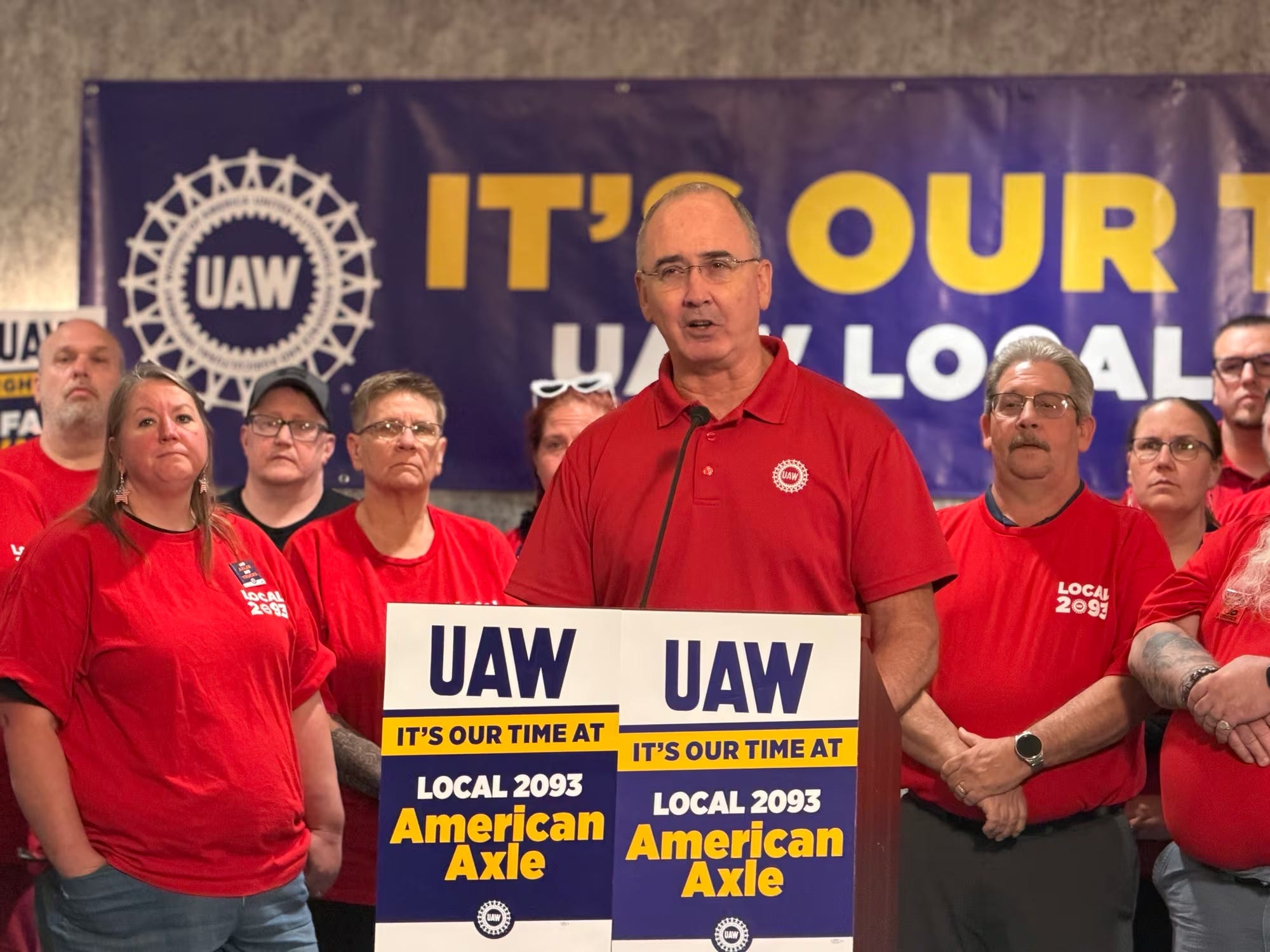
UAW workers strike key GM supplier after 18 years of concessions
Nearly 1,000 members of UAW Local 2093 walked off the job June 1 at Dauch Corporation’s Three Rivers, Michigan facility, a critical supplier of axles and driveline components for General Motors’ most profitable pickup trucks. Workers launched an unfair labor practice strike after negotiations collapsed and the company failed to meet demands around wages and healthcare.
In 2008, during the Great Recession, workers agreed to major concessions under the threat of plant closure. Employees previously earning as much as $29 an hour saw wages slashed to roughly $14.50. Eighteen years later, top pay has only recovered to about $22 an hour after a five-year progression. Adjusted for inflation, workers are making half as much as their pre-2008 pay. Meanwhile, the company has thrived. American Axle has generated roughly $8.4 billion in profits over the past decade. During that same period, the CEO made $111 million. UAW President Shawn Fain summed up the frustration: “For 18 years, these members have built you an empire of profit while getting treated like dirt.”
The strike targets a key chokepoint in GM’s supply chain. Analysts estimate GM only has a limited supply of axle inventory before production of its highly profitable truck lines begins feeling pressure. Like the Stand Up Strike strategy in 2023, the UAW is targeting a strategic point in the supply chain where a relatively small group of workers can have an outsized impact.
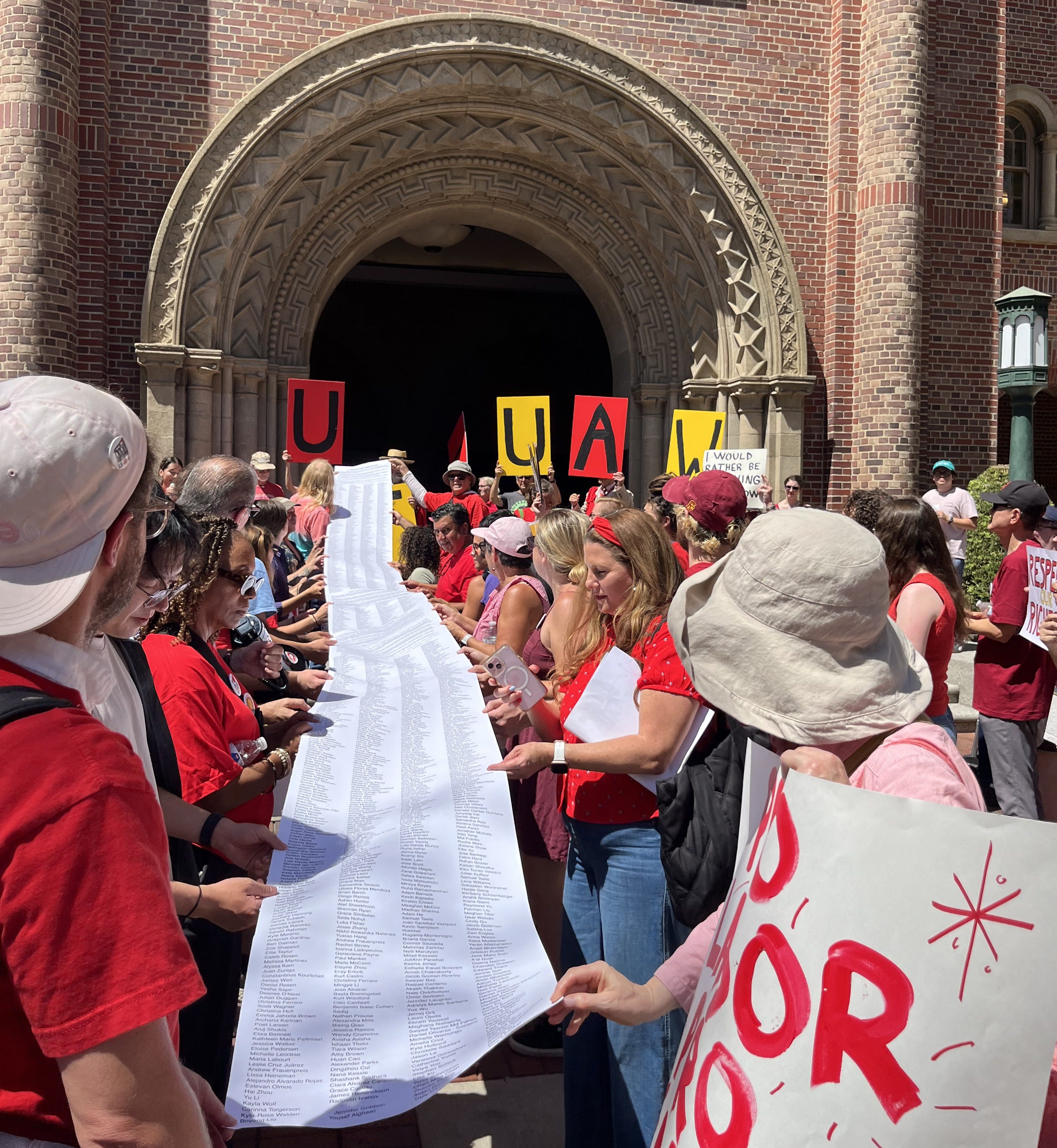
USC faculty win major union election after years of delays
Faculty at the University of Southern California voted overwhelmingly to join the UAW this week, marking one of the largest private-sector higher education organizing victories of the year. The bargaining unit includes roughly 2,700 non-tenure-track faculty, including adjunct instructors, full-time teaching faculty, research scientists, and clinical healthcare practitioners who teach and conduct research across the university.
The victory comes after years of organizing and nearly eighteen months of legal delays. USC repeatedly challenged the bargaining unit and argued before the NLRB that all of the workers were ineligible to unionize, despite established precedent of similar bargaining units at other private universities. Organizers accused the university of pursuing a familiar union-busting strategy: drag out the process, force endless legal fights, and hope workers lose momentum before ever reaching an election.
Instead, workers maintained support throughout the campaign. When the NLRB finally ordered an election last month, faculty delivered a decisive result. Roughly 78% of eligible workers participated, with approximately 70% voting in favor of unionization. After years of delays and aggressive opposition, workers demonstrated that support for the union had not faded – it had grown.
The win is particularly significant in Los Angeles. USC is the second-largest private employer in the city after Kaiser Permanente, and the campaign adds another major group of workers to the growing UAW presence in higher education. Following recent organizing victories across the University of California system as well, the union has grown by thousands of academic workers joining across the state.
The fight is not over. USC has already appealed to the national NLRB in an attempt to block recognition. But after years of delays, faculty have spoken clearly. At a time when university administrations have largely accommodated Trump’s attacks on higher education, workers are increasingly organizing to defend themselves and the institutions they help run.
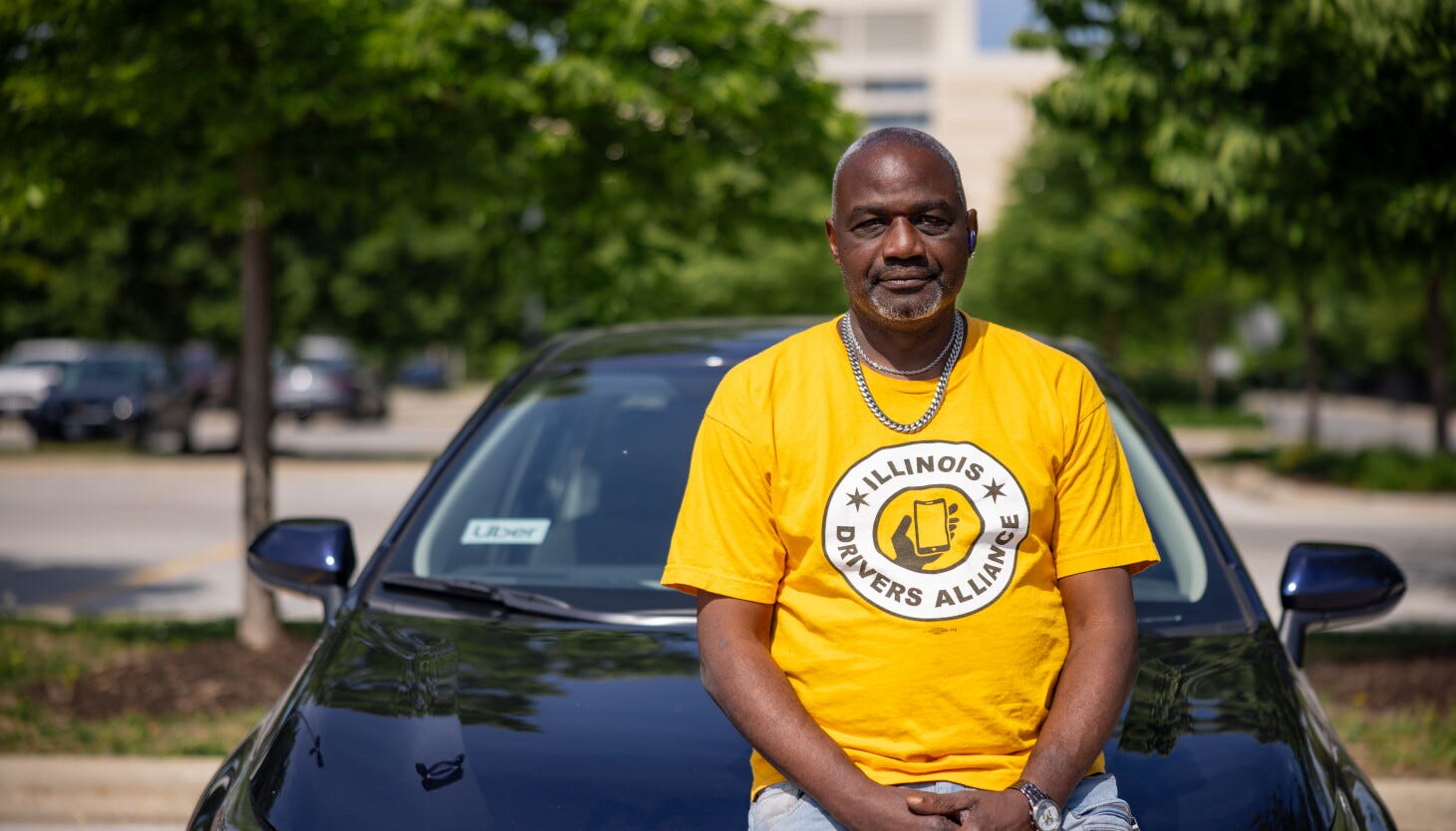
100,000 Illinois Rideshare Drivers Win Path to Unionize
Soon after 70,000 Massachusetts drivers formed the first recognized rideshare union in U.S. history last week, Illinois lawmakers have passed legislation creating a pathway for approximately 100,000 Uber and Lyft drivers to organize and negotiate a contract. The win for MA rideshare drivers is the biggest private sector unionization win since 1941 when Ford recognized the UAW. Now Illinois and California are continuing the trend with hundreds of thousands more drivers who could be soon to follow. If this momentum spreads nationally, rideshare workers could become one of the largest groups of new union members in generations.
The legislation allows drivers to form unions, elect representatives, and collectively negotiate over wages, deactivations, safety concerns, and more. For years, drivers have argued that while companies classify them as independent contractors, the platforms exercise enormous control over their livelihoods and are completely dependent on the driver workforce to operate.
After years of battles over worker classification, organizers have increasingly pursued state-level frameworks that create pathways to bargaining outside traditional NLRA recognition models. The strategy mirrors earlier efforts by SEIU among homecare and domestic workers who were similarly excluded from federal labor law protections.
Drivers have consistently cited low pay, lack of transparency, and arbitrary deactivations as major issues. In recent years, companies have raised the price on riders while lowering the payout to drivers – squeezing profit from both ends as they flex their growing monopoly power in the sector. That has only made it more difficult for drivers to make ends meet. For the first time, they will have a path to negotiate at the table to address them.
For years, Silicon Valley thrived on the idea that app-based workers were too isolated and fragmented to organize while ensuring through misclassification that none would have a legally guaranteed path to unionize. As their efforts fall apart to block unionization, tech giants are simultaneously pushing autonomous vehicles across the country that threaten to eliminate millions of jobs across the country. The drivers recognize this threat as well, demanding as seat at the table and a voice in the halls of power to ensure robotaxis don’t devastate their livelihood.
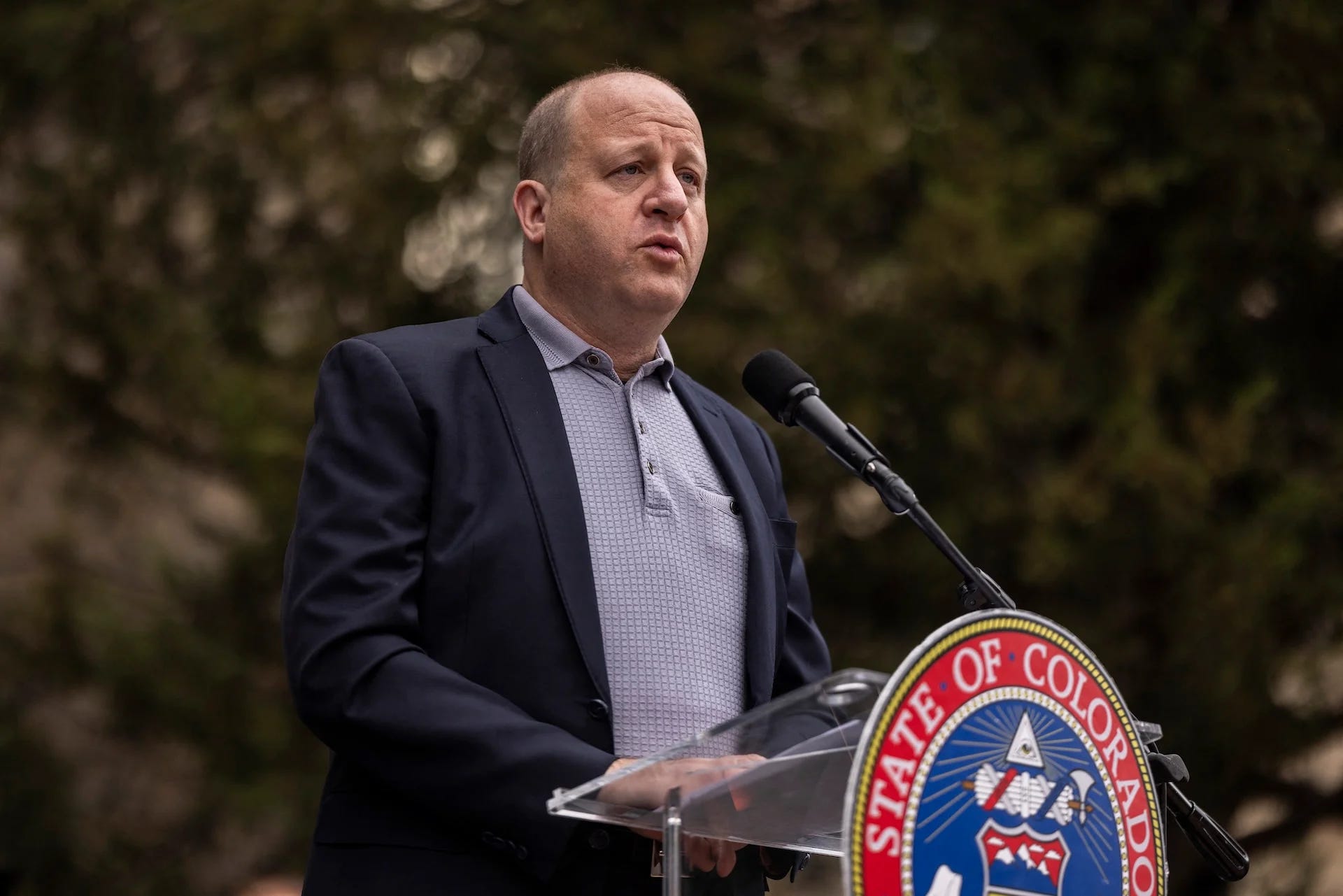
Colorado labor movement suffers setback as Democratic Gov Polis vetoes Worker Protection Act again
Colorado Governor Jared Polis vetoed the Worker Protection Act for the second year in a row, blocking legislation that would have removed Colorado’s unique labor law often referred to as “right-to-work lite.” Colorado’s Labor Peace Act requires unions that have already won recognition to clear a second hurdle before negotiating union security agreements. Workers must win a separate vote with support from 75% of employees, a threshold that Polis himself has acknowledged is extraordinarily difficult to achieve at large workplaces. Yet despite recognizing the problem, he vetoed repeal efforts once again.
Labor leaders argue the system effectively functions as a hybrid right-to-work framework, forcing newly organized unions to clear an additional hurdle just as they are trying to build power and negotiate a first contract. The law dates to 1943, before Congress passed Taft-Hartley and opened the floodgates for right-to-work laws nationwide. Labor advocates argue Colorado’s system remains a relic of that anti-union era.
For unions, the frustration is especially sharp because the legislation passed the legislature with broad labor support. Instead of siding with workers and unions, Polis – the Democratic Governor – once again sided with business interests arguing the status quo should remain intact. This echoes the betrayal of labor by Democratic Virginia Governor Abigail Spanberger who last month vetoed a piece of legislation that would have dramatically expanded public sector bargaining rights across the state.
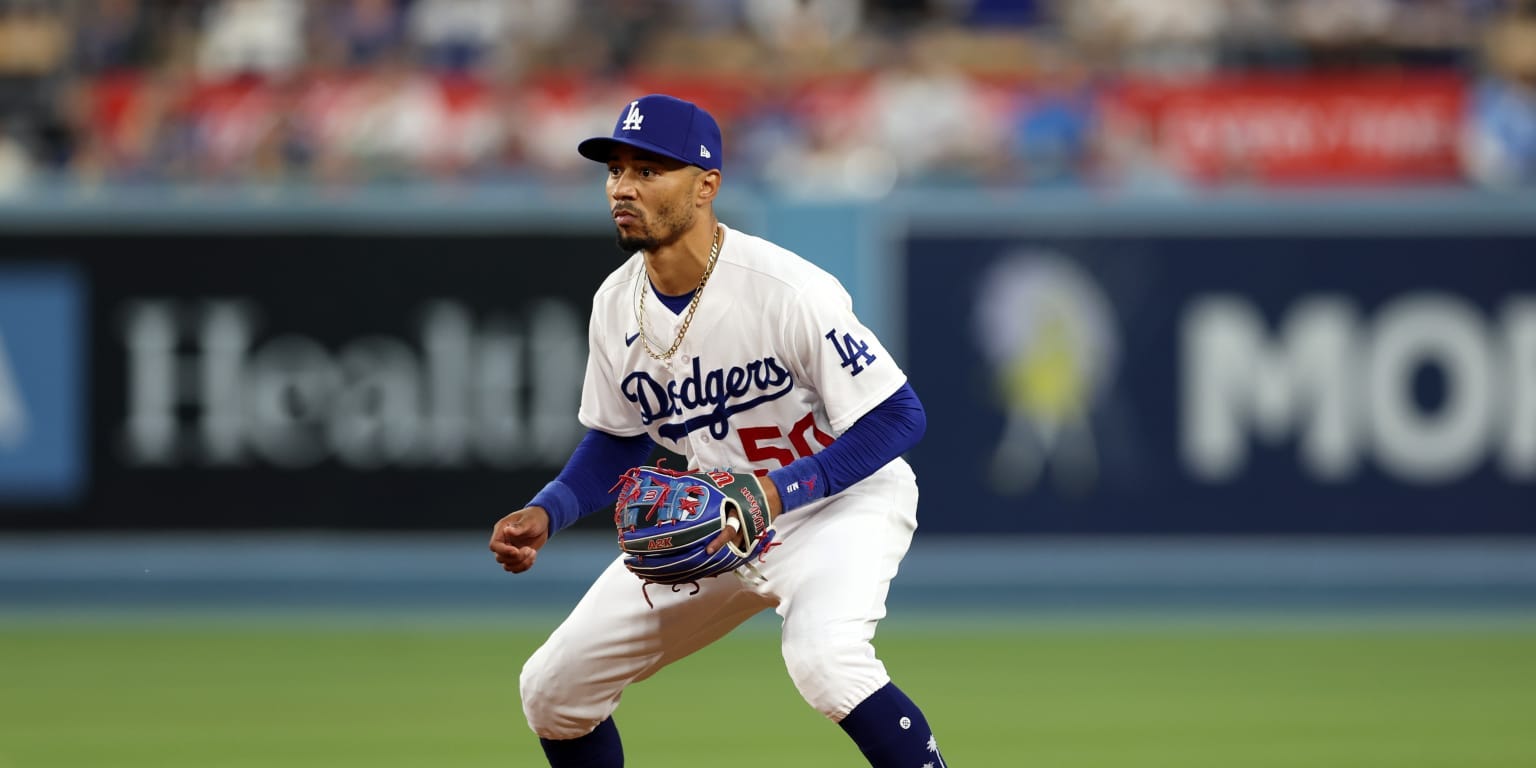
MLB owners revive push for a salary cap
Major League Baseball owners have officially placed a salary cap proposal on the table during collective bargaining, setting up what could become the defining conflict before the current agreement expires on December 1. The proposal would cap total team payroll and limit how much clubs can spend on player salaries.
Owners argue a cap would improve competitive balance. The MLB Players Association counters that the real issue is not teams spending too much on players but many owners choosing not to spend enough. Nearly a third of teams operate well below current payroll thresholds while still collecting substantial revenue-sharing payments. Rather than requiring owners to invest more, a salary cap would simply limit worker compensation.
MLB generates more than $12 billion annually. The players’ position is straightforward: the issue is not excessive spending on labor but owners choosing not to invest in their teams. Instead of a cap, the MLBPA has favored stronger spending floors that would require owners to compete. The smaller market teams are still guaranteed a revenue share each season, which has encouraged owners to minimally invest in the players and teams while still collecting billions each season.
The fight over salary caps carries enormous historical significance for the league. The last major attempt to impose a salary cap helped trigger the 1994 strike, which lasted 232 days and canceled 948 games – the longest work stoppage in MLB history. That memory hangs over negotiations today.
BONUS ROUND
Bring it to the shop!
The Pickets & Power Bulletin covers the biggest stories impacting all working people today. Share these stories with your union siblings, coworkers, friends, and family. Read it together, discuss, and take lessons to strengthen your own fights. When we fight, we win – and when we fight, we learn. Tell us in the comments about campaigns you think we should include in our next bulletin!