



Teamsters win national contracts at DHL and First Student
Two major national Teamsters contracts were secured this week, covering over 23,000 workers across logistics and transportation, after strike threats against both companies forced them to move.
At DHL, roughly 6,000 Teamsters across 26 locals in 16 states won a new national agreement just ahead of a March 31 strike deadline, backed by a 96% strike authorization vote. Key issues included raises and improved benefits, protections against subcontracting, and a ban on self-driving trucks. The strike threat at DHL reflects the 2023 UPS national contract fight, when Teamsters organized the first major national strike threat at the company since the 1997 UPS strike.
At First Student, covering roughly 17,000 school bus drivers and support staff nationwide, Teamsters also secured a tentative agreement after an 88% strike authorization vote. They won improved retirement and healthcare benefits and a national economic framework to raise standards across hundreds of local agreements.
In sectors like logistics and transportation – where workers sit at key choke points in the economy – national credible strike threats like these carry immense leverage over the boss. National master contracts are rare, but remain an important battleground in sectors of the economy with high union membership, like transportation and logistics.
However, both face major threats from non-union competitors which put downward pressure on these same national union contracts. This is part of why the expansion of companies like Amazon – the massive non-union logistics giant – poses an existential threat to the Teamsters if they remain unorganized.
May Day organizing expands after largest protest in U.S. history
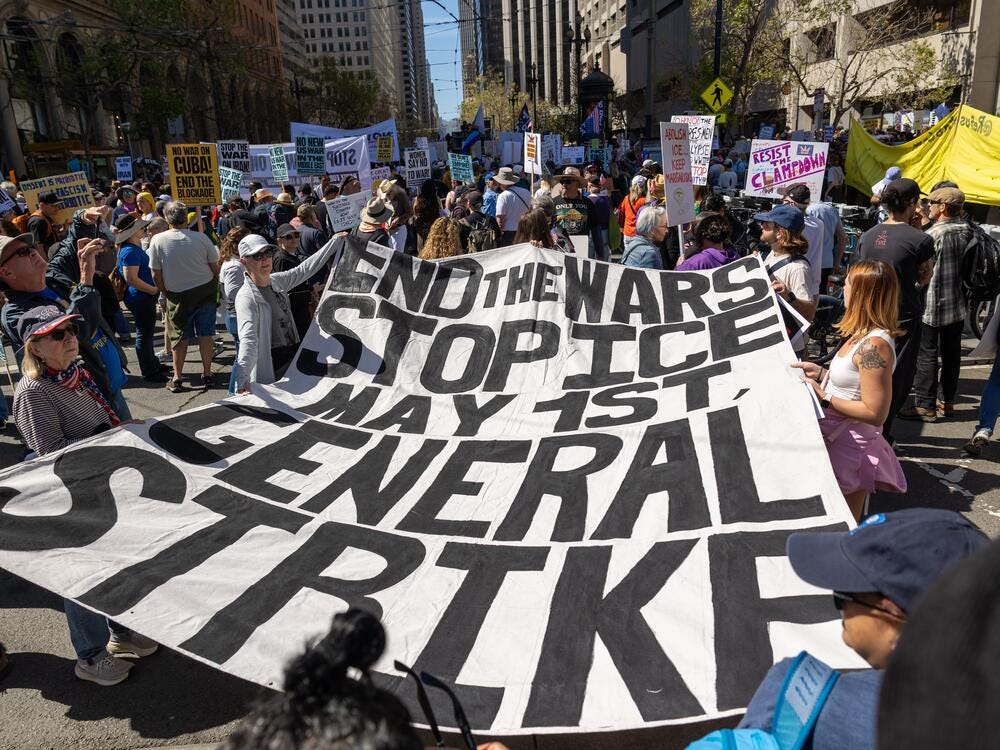
Following the massive “No Kings” day of action on March 28, organizers are continuing to focus this new energy towards May 1. More than 8 million people took to the streets across over 3,300 protests nationwide, making it the largest single-day protest in U.S. history.
Organizers are calling for a nationwide May Day national shutdown – “no work, no school, no shopping” – effectively a general strike. The May Day Strong coalition, made up of hundreds of organizations, is organizing canvassing operations, mass outreach, and over 100 “Solidarity Schools” to prepare for coordinated action across the country. The coalition includes major national unions amplifying and supporting the call – including the National Education Association, American Federation of Teachers, National Nurses United, United Electrical Workers, and United Auto Workers – as well as city and state coalitions of union locals, labor councils, immigrant rights, and community organizations building local efforts.
Similar to the “No Kings” protest movement, May Day actions are calling broadly on working people to stand up to the endless attacks by the Trump administration and the billionaire agenda he has pushed. The scale of last week’s protests, combined with the speed of organizing since, suggests the struggle against Trump could be entering a new phase. There is no telling what could happen between now and May 1, but the country is turning more and more to a tinderbox ready to burst with the next match.
Oracle cuts jobs to fund AI expansion and reshape tech industry
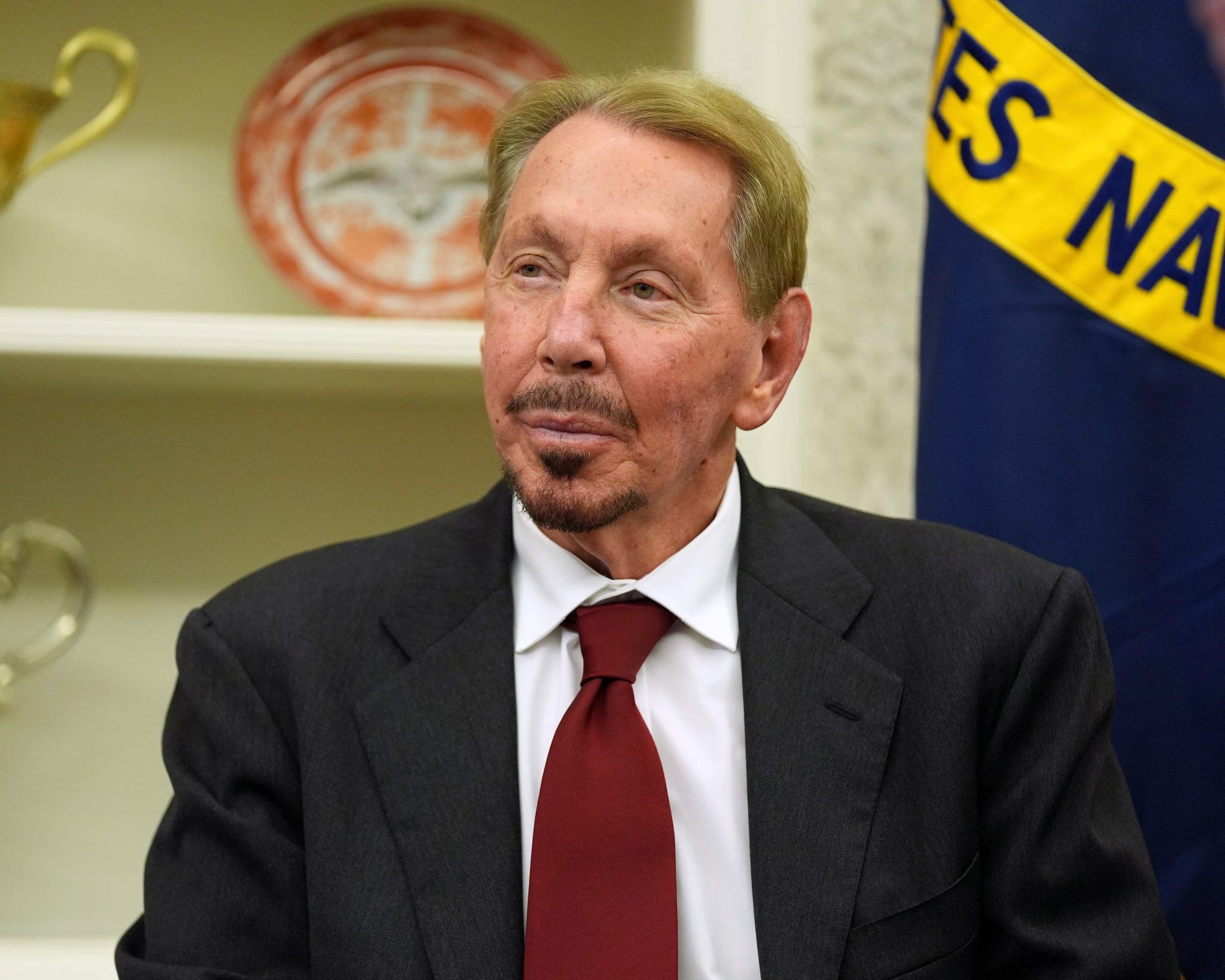
Oracle is the latest major tech company to accelerate layoffs while doubling down on investments and big bets on artificial intelligence (AI). The company announced it is cutting potentially as much as 18% of its workforce, or up to 30,000 workers globally. Adding insult to injury, workers reported being notified they were fired by email at 6am with no warning. This comes as Oracle pivots resources into AI and cloud expansion. This includes a $16 billion data center project in Michigan the company is moving on as it conducts mass layoffs. At the center of this is Larry Ellison – co-founder, Chairman, and CTO at Oracle and one of the richest people on the planet, as well as a close political ally of Trump.
The layoffs come as part of a broader trend across the tech sector. More than 40,000 tech workers have already been laid off in 2026 at more than 70 tech companies, as companies restructure around AI systems and promise greater efficiency with smaller teams. Investors continue to reward these moves. Oracle’s stock rose following news of the cuts, even as its overall value has declined significantly over the past year.
Oracle’s strategy reflects a deeper shift in the industry. Oracle was for decades a dominant database company built through government contracts (initially from the CIA) and aggressively buying out the competition. Now it’s positioning itself as a core infrastructure provider for the AI era – competing with giants like Amazon Web Services to control the computing backbone other companies rely on. That means owning the hardware and real estate needed for what they see as the coming AI economy.
They are doing this by freeing up more capital by firing huge sections of the workforce. As AI systems spread into logistics, healthcare, education, and beyond, employers across industries are preparing to use them to reduce labor costs, increase productivity demands, and reshape workplaces how they see fit. Oracle is betting on this expansion and pivoting their own operations accordingly.

Shutdown limbo passes 50 days
The longest Department of Homeland Security shutdown in U.S. history – now over 50 days since February 14 – is still yet to break as sections of Congressional Republicans move to fund core agencies like TSA and FEMA without additional ICE and CBP funding, punting that fight to a separate budget reconciliation bill in the near future. Trump is demanding Congressional Republicans deliver this reconciliation bill to fund ICE and CBP to his desk by June 1. However, House Speaker Mike Johnson has shifted back and forth on ending the shutdown or caving to the hardliner right-wing on the Republican party. Now the crisis remains unresolved at least until mid-April when Congress reconvenes.
This follows weeks of mounting pressure as the shutdown pushed the airline system toward collapse, holding travelers and TSA agents hostage. More than 450 TSA agents quit, absentee rates surged above 10% nationally, and airport wait times stretched out the door for hours in some cases. TSA agents – classified as “essential” – were forced to work without pay, while politicians used their livelihoods as leverage in a broader political fight. Without pay, many have had no choice but to stop coming in to feed their families. Due to public pressure and rising absentee rates for TSA, Trump signed executive orders to cut back pay checks for TSA.
At the center of that fight was Trump’s push to expand funding for ICE and CBP without any checks on their violence. As the crisis continued, Trump is making the passage of the SAVE Act a major priority, which would require a passport or birth certificate to vote and force states to share voter data with DHS. These measures would likely disenfranchise millions. Facing defeat in Congress, Trump signed an executive order on March 31 tightening rules on mail-in ballots to push the same agenda. With declining support, Republicans are desperately looking for ways to steal the midterm elections.
This comes just months after another shutdown earlier this year tied to cuts to healthcare subsidies, which are already hitting working families. In March, a West Health-Gallup survey showed one in three Americans have had to cut expenses, like food and gas, to pay for increased premiums.
BONUS ROUND
Bring it to the shop!
The Pickets & Power Bulletin covers the biggest stories impacting all working people today. Share these stories with your union siblings, coworkers, friends, and family. Read it together, discuss, and take lessons to strengthen your own fights. When we fight, we win – and when we fight, we learn. Tell us in the comments about campaigns you think we should include in our next bulletin!