


Shutdown chaos: TSA agents call out sick nationwide, Trump threatens to send in ICE
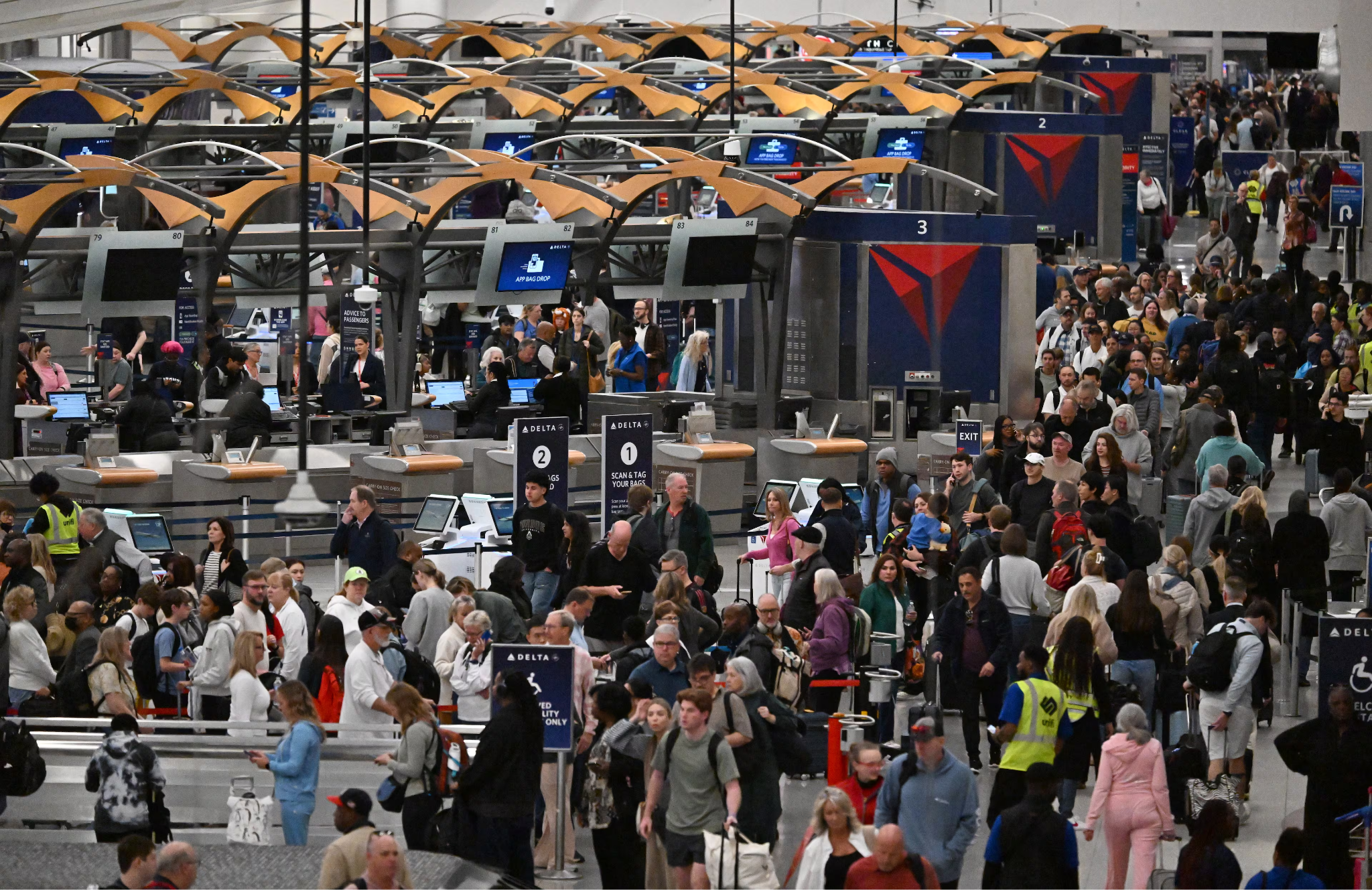
Major airports have become increasingly dysfunctional, with travelers in security lines for hours on end, snacking through airports and spilling into the streets. This is only made worse by skyrocketing fuel prices due to the U.S. war on Iran causing major shortages and disruptions to the supply chain.
The federal government shutdown, which began earlier this month after gridlock in Congress over the latest DHS funding bill, has led to this crisis in air travel. At the center of the conflict are demands from the Trump administration to give ICE and CBP nearly 30 billion additional dollars – insisting that the funding come with no meaningful restraints (e.g. judicial warrants, mask ban, and more) to the lawlessness with which they operate. At the same time Trump wants an additional $200 billion for military spending to fuel the war in Iran.
Now, TSA agents have begun missing paychecks while still being required to work as “essential” employees. Across major airports – including Atlanta, JFK, Chicago O’Hare, and LAX – workers have started calling out sick in growing numbers, leading to long lines, delays, and staffing shortages. Nationally over 10% of the 50,000 TSA agents have reportedly called out, with numbers as high as 35% in New Orleans and Atlanta and 40% in Houston calling out. Further delays and disruptions are expected as the shutdown drags on. Today, Trump and “border czar” Tom Homan announced that DHS would be sending ICE agents into the airports to help with security. A move that will undoubtedly inflame the situation.
Southern service workers join May 1 national shutdown call
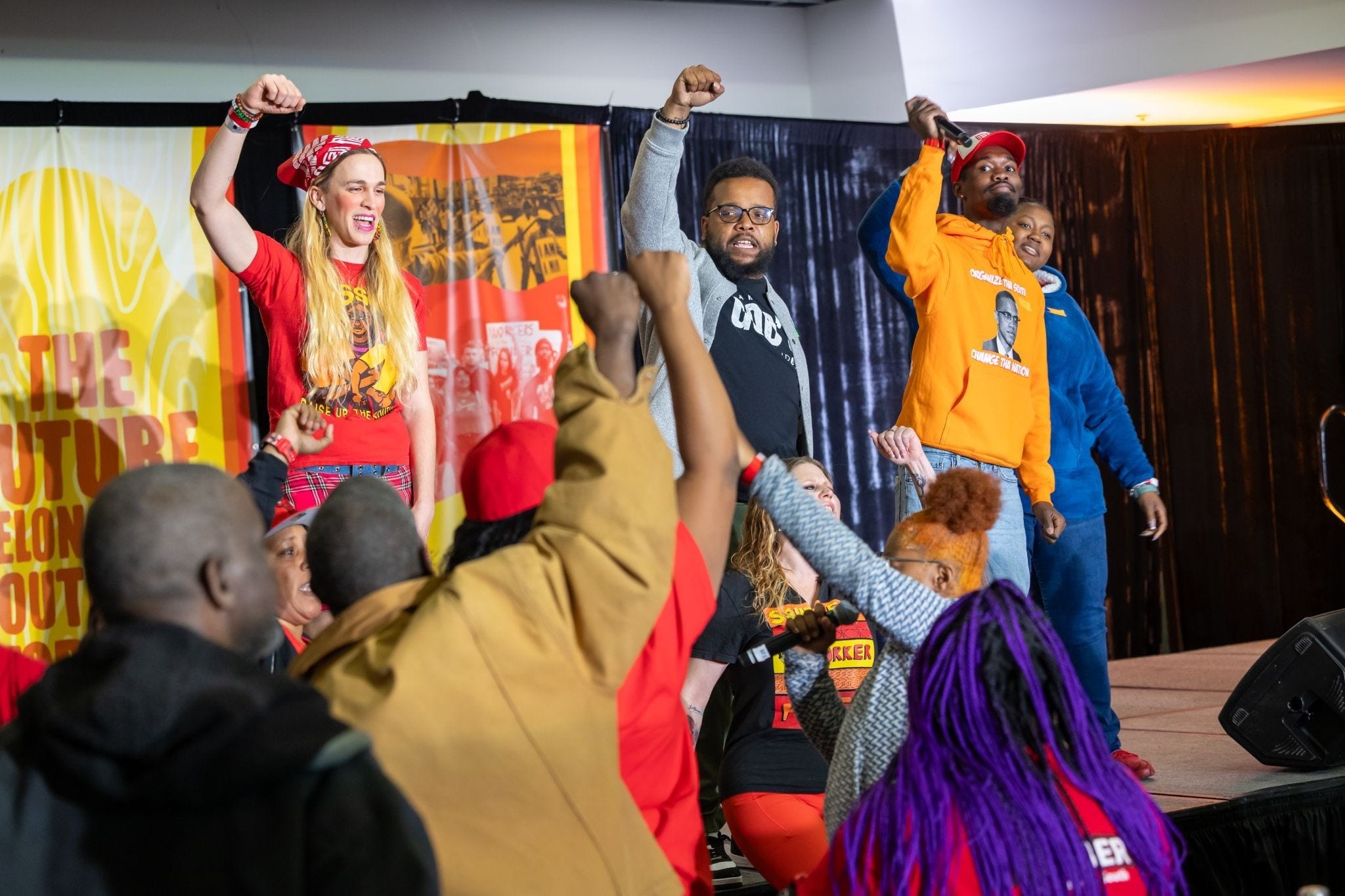
The call for May 1st as a national day of “no work, no school, no shopping” continues to grow, with the Union of Southern Service Workers (USSW) – a union of low-wage service workers across the South – stepping forward as a key organizing force spreading the call in the region. At their Southern Worker Power Summit in Atlanta this past weekend, USSW announced their plans to go all in on May Day and launched plans for upcoming “Solidarity Schools” to train organizers and build a coordinated outreach and canvassing operation across the South and beyond.
With major cities, unions, and grassroots worker groups joining, organizers are attempting to turn May 1 into a nationwide show of working-class power – and a step toward rebuilding a general strike movement.
JBS workers launch historic meatpacking strike
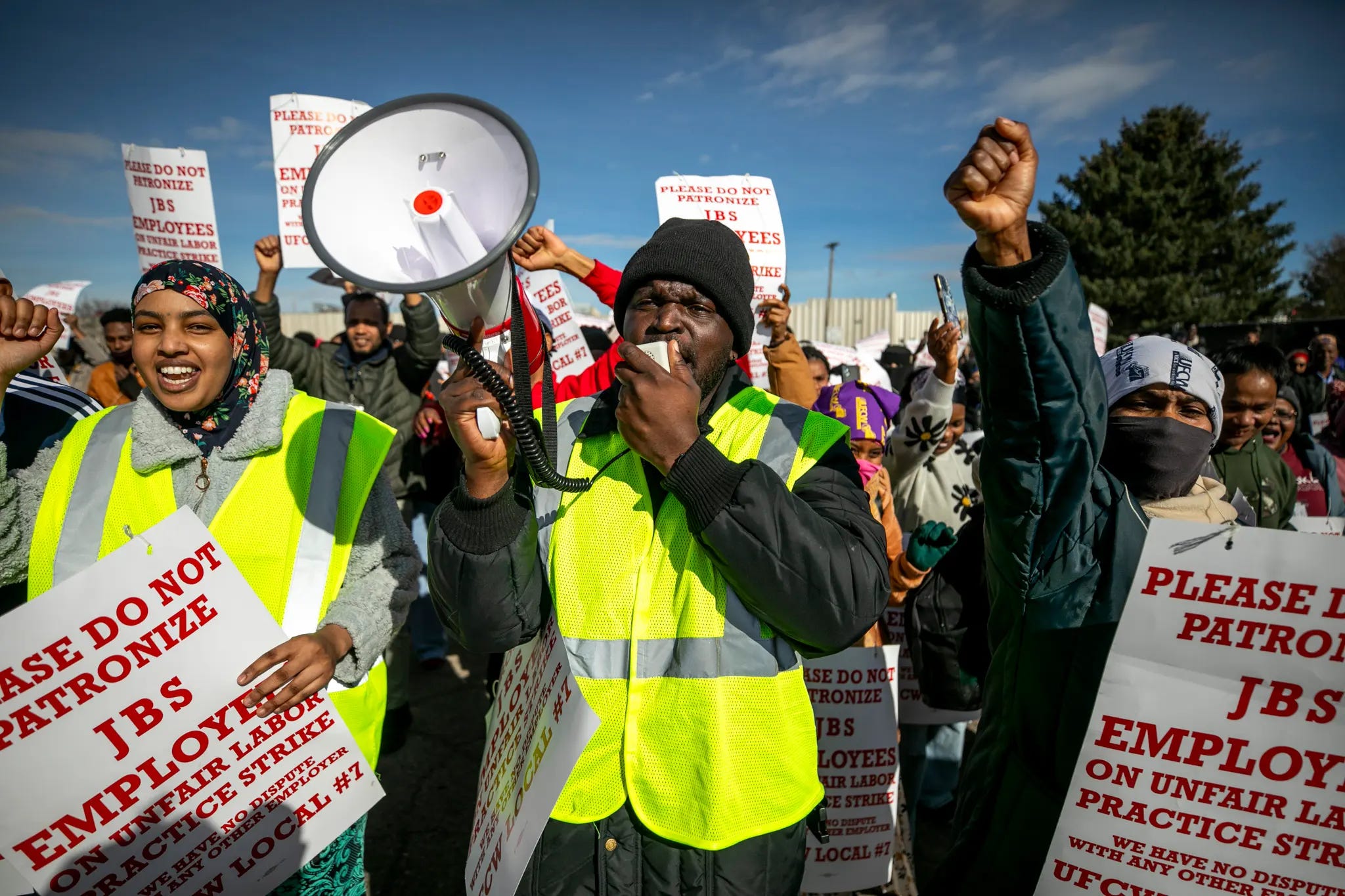
More than 3,800 workers at the JBS beef plant in Greeley, Colorado walked out on Monday, launching the first major U.S. meatpacking strike in decades, the largest since the 1986 Hormel strike. Members of UFCW Local 7 are striking over unsafe working conditions, line speeds, low wages, and management’s illegal conduct during bargaining. Workers say injury rates remain high in one of the most dangerous industries in the country, while the company continues to push production targets, worrying more about the beef than the workers who process it.
JBS is the largest meat processing company in the world, controlling a major share of beef production in the U.S. and globally. A strike at this scale has the potential to disrupt a critical node in the food supply chain. Typically processing over 5,000 head of cattle a day at the plant – about 5% of the total US production – production rates have plummeted to next to nothing due to the strike.
The workforce is largely immigrant, including many workers facing uncertainty over immigration status as the federal government intensifies enforcement. Despite these pressures, workers are striking anyway – a powerful show of solidarity in an industry long built on fear and exploitation.

AI layoffs expand as Meta signals major cuts
Meta may cut 20% of its workforce – about 15,000 workers of its 79,000 workers – the latest escalation in AI-driven layoffs. This would be the largest layoff in the company’s history, surpassing the mass layoffs in 2022-2023 which CEO Mark Zuckerberg euphemistically called the “Year of Efficiency.”
The move follows high-profile cuts at companies like Block, where CEO Jack Dorsey eliminated roughly 40% of the workforce, arguing AI would allow smaller teams to do more work. Across the tech sector, companies are cutting jobs while promising future gains from automation – and investors are rewarding them for it. What makes this moment distinct is that many of the workers being laid off are the same workers who helped build these technologies. Now, AI is being turned against them as a tool for cost-cutting.
Tech workers are now all feeling the heat with their job security disappearing due to these threats, putting the pressure on to meet higher performance standards or be the next ones to get fired. This trend is a warning sign for workers across industries. As AI systems mature and spread beyond tech into healthcare, logistics, education, and beyond, employers are already preparing to use them to reduce labor costs, restructure workplaces, and weaken worker leverage – all in the name of efficiency and shareholder returns.
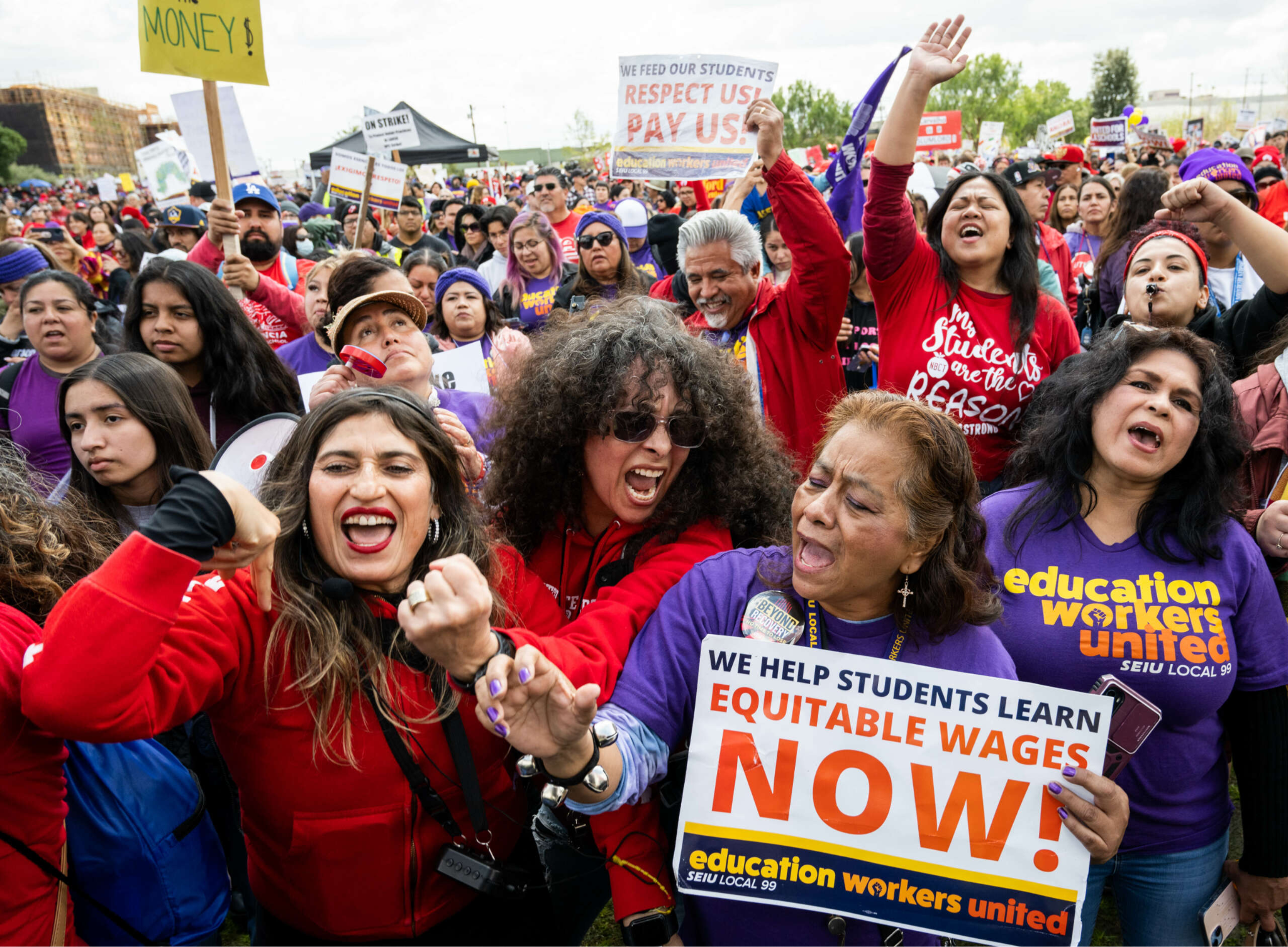
LA educators set strike date as CA wave reaches turning point
California’s educator strike wave is reaching a new stage as United Teachers Los Angeles (UTLA) announced a strike date of April 14 after an overwhelming 96% strike authorization vote. This week, educators across UTLA, SEIU Local 99, and Teamsters Local 2010 rallied together, signaling unity across teachers, school staff, and school site administrators. At the center of the fight is a familiar issue: resources are there, but districts refuse to spend them.
LAUSD is sitting on billions in reserves, while classrooms remain overcrowded, staffing shortages persist, and educators struggle to meet student needs. At the beginning of the school year, LAUSD had over $5 billion in reserves, and has been called out for committing $10 billion to private multiyear contracts during 2022-2025. This has become a defining message of the statewide “We Can’t Wait” campaign, calling to invest today’s dollars in today’s students.
Meanwhile, Natomas and Twin Rivers educators have both secured contract victories after the historic first strikes for both school districts.

Trump policy threatens licenses of 200,000 immigrant truckers
The Trump administration is moving forward with policies that could strip up to 200,000 immigrant truck drivers of their ability to work by tightening eligibility requirements for commercial driver’s licenses (CDLs). The policy would restrict or revoke licenses for drivers who lack permanent legal status or whose work authorization is tied to temporary protections, including TPS programs that are now under threat. Many immigrant drivers who have legally obtained CDLs under existing rules could suddenly be disqualified.
Truckers are a backbone of the U.S. supply chain, and immigrant workers make up a significant share of the workforce. Labor groups warn the policy would destroy livelihoods overnight, deepen driver shortages, and further strain supply chains. Unions and worker advocates are beginning to mobilize in response, framing the move as both an attack on immigrant workers and a broader assault on labor stability in a critical industry.
This latest attack on another essential and legal group of immigrant workers demonstrates once again that the Trump administration’s immigration policy is not about criminality or benefiting American workers. It is about demonizing and scapegoating working class immigrants, no matter the cruelty or harm to the economy.
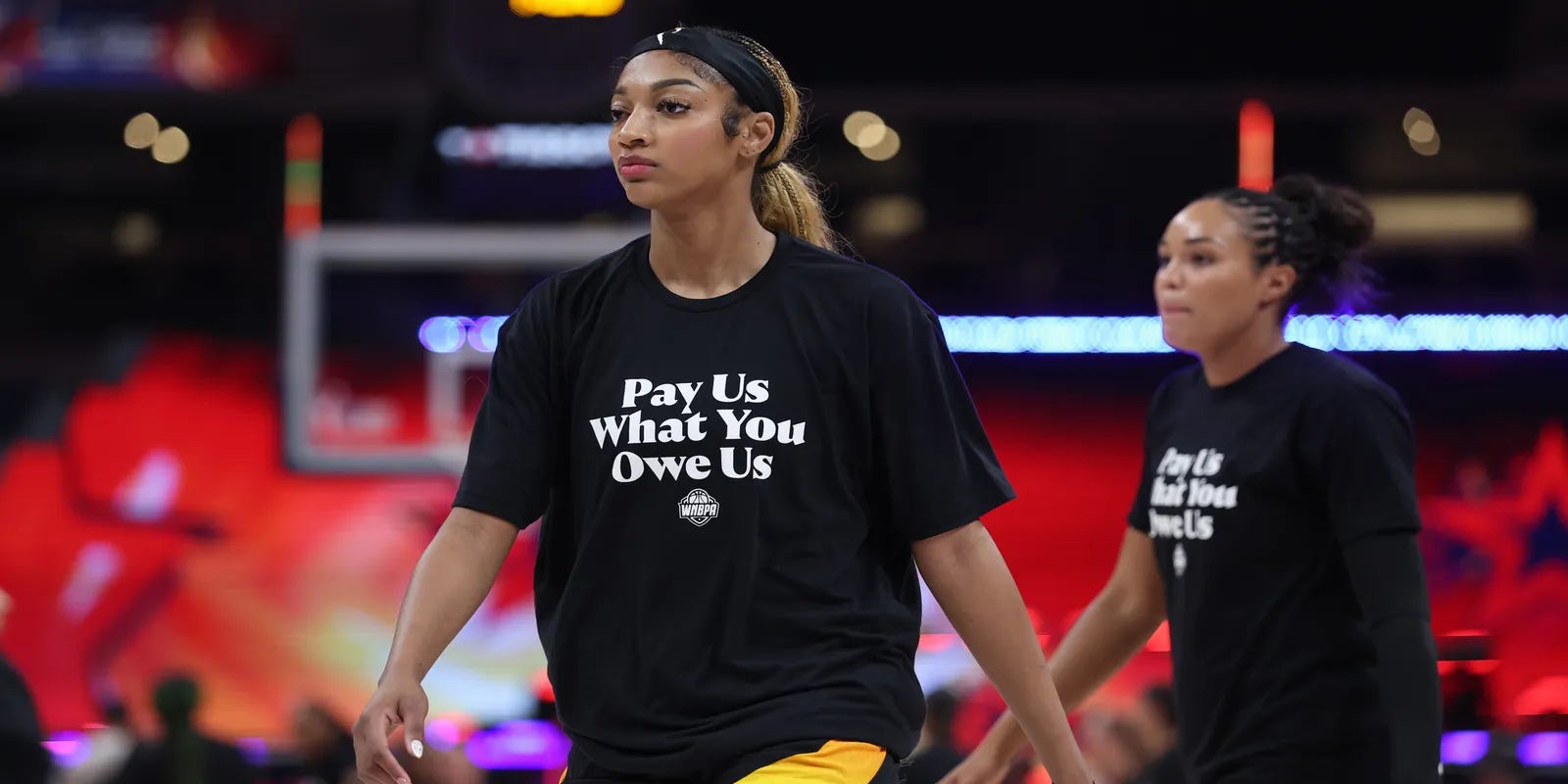
WNBA players win major contract after strike threat
Players with the Women’s National Basketball Players Association (WNBPA) secured a new contract this week after a credible strike threat forced league owners to move. After voting 98% to authorize a strike, players won gains including significant salary increases, improved revenue sharing tied to league growth, expanded charter travel, and stronger protections around workload and scheduling.
The deal marks a major shift from previous agreements, where players saw limited financial gains despite driving the league’s rapid growth in popularity and revenue. Now, players have secured a larger share of that success. The minimum salary has now been set to $300,000 with average salary range at $600,000, with average revenue sharing up to 20%. This is nearly double the previous share players received, though it still lags behind the 50% revenue share that NBA players receive.
The victory shows the impact of organizing and strike power in professional sports, and reinforces a broader lesson across industries: when workers are willing to strike, they can force even some of the most powerful employers to concede.
Bring it to the shop!
The Pickets & Power Bulletin covers the biggest stories of the labor movement impacting working people today. Share these stories with your union siblings, coworkers, friends, and family. Read it together, discuss, and take lessons to strengthen your own fights. When we fight, we win – and when we fight, we learn. Tell us in the comments about campaigns you think we should include in our next bulletin!

Excited about those upcoming Solidarity Schools from USSW!