


NYC hotel workers secure historic contract victory
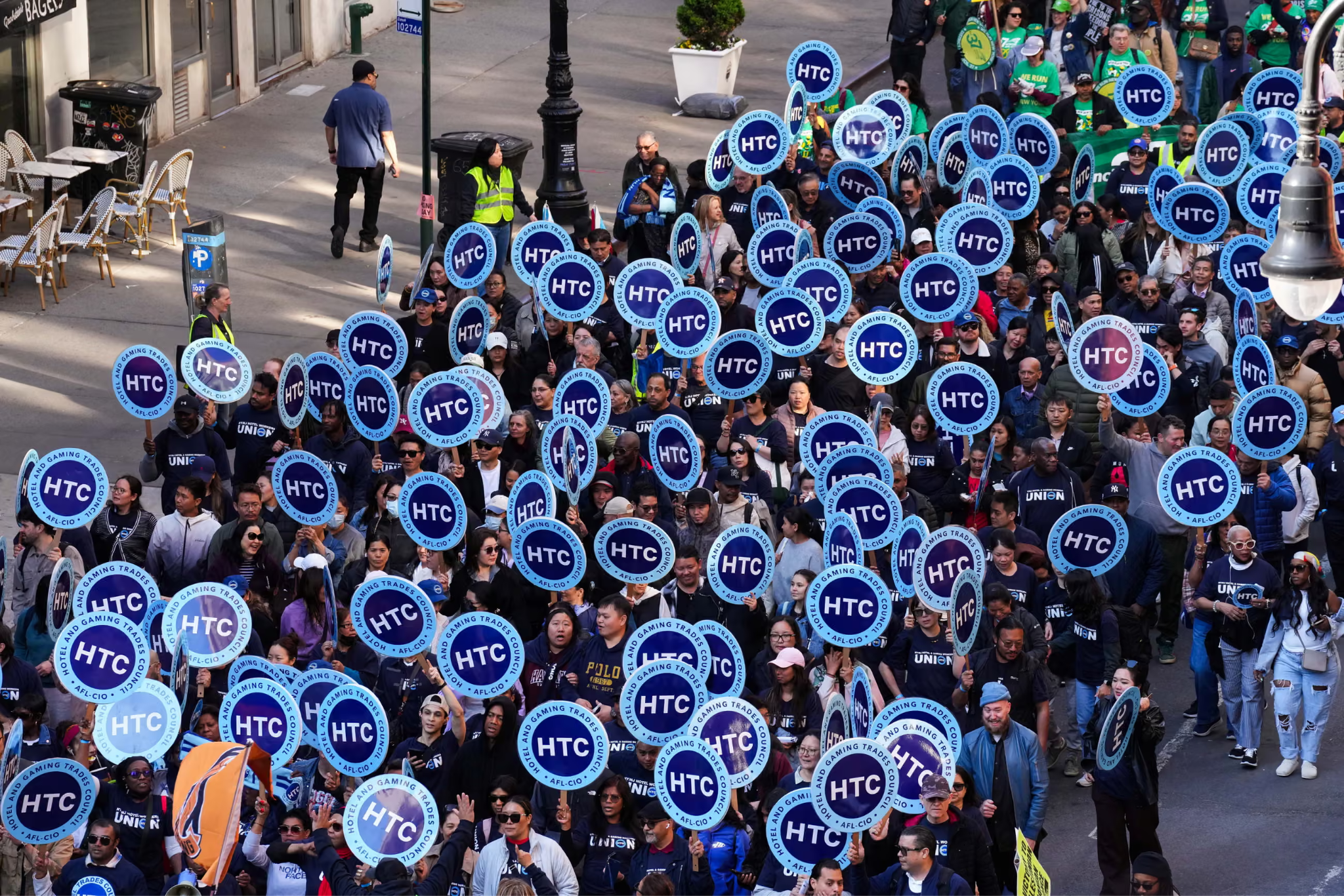
More than 30,000 hotel workers in New York City won one of the largest hospitality contracts in U.S. history this week, after months of escalating pressure and growing strike threats ahead of the World Cup and peak tourism season. Workers with the Hotel and Gaming Trades Council (HTC) secured major gains in wages, pensions, healthcare, childcare, staffing protections, and new safeguards around artificial intelligence and automation.
The deal reportedly includes raises exceeding 50% over the life of the eight year agreement, protections against automation replacing jobs, expanded family supports, and stronger protections against understaffing – a major issue since the pandemic as hotels cut staffing levels while demanding remaining workers do more.
Union leaders made clear they were willing to strike if necessary, threatening disruption across one of the country’s largest tourism hubs just as New York prepares for a massive influx of visitors for the World Cup. This opportunity gave the workers major leverage at the table.
NYC is the largest urban hotel market in the US, rebounding coming out of the pandemic years. Hotel guests spend $38.4 billion annually across the city.
The industry wide agreement is a rare opportunity for workers at coordinated bargaining across the biggest players in the sector, giving workers the power to not just push standards at one employer but to lift standards across the industry. This framework is a reflection of the power of unionized hospitality workers in NYC, first negotiated in 1939.
Since the last contract negotiations, the union set out to regain strength in the sector after years of declining density by pushing a wave of new organizing to increase density. Ultimately, they succeeded in building greater density, in addition to securing key worker protections and strike preparation that prepared them for this fight to flex their power and win.

Meta fires 8,000 workers betting big on AI
Meta laid off another 8,000 workers this week, part of plans to cut up to 20,000 jobs in 2026, as the company doubles down on artificial intelligence (AI). The layoffs come despite Meta posting over $60 billion in profits last year, while CEO Mark Zuckerberg continues pouring billions into AI infrastructure and computing capacity. Despite reporting over $60 billion in profits last year, the company is majorly restructuring. The message from Wall Street is that if companies continue to cut workers and invest in AI, then the stock market will reward them.
Meta says the layoffs are about efficiency and reorganizing around the future of technology. But workers increasingly see a broader trend unfolding across tech. Companies are not only betting on AI to eventually replace labor – they are cutting workers now to free up billions for speculative investments in that future. Collectively over $700 billion has been invested in 2026 in massive AI capital projects, especially data centers and the infrastructure of the AI boom. Similar waves have already hit companies like Block, Salesforce, Microsoft, and Amazon – with estimates already over 114,000 tech jobs cut in 2026 so far. Since 2022, over 800,000 tech workers have been laid off as firms chase profitability after years of expansion. This has become a norm to signal “financial responsibility” to investors, meaning they will cut as deep as their competition to stay “efficient.”
What makes this moment especially bitter is that many of the workers facing layoffs are the same people who helped build the technologies now being used to justify eliminating their jobs.
The response from organized tech workers has been sharp. In a statement responding to the layoffs, the Alphabet Workers Union argued, “It’s hard not to feel anxiety and fear when we can see more and more tech companies cutting huge portions of their workforce both in anticipation of replacing them with AI and to fund their multi-billion dollar bets on AI as the future of the industry…. The products generating massive profits for companies like Meta and Google don’t exist without our labor… don’t mourn, organize!”
This fight increasingly reaches far beyond Silicon Valley. Employers across healthcare, logistics, education, media, and customer service are now rapidly experimenting with AI to cut labor costs and intensify workloads. Tech workers are simply the first major group learning what happens when the technology you helped build gets turned back against you.
LIRR workers strike – and win
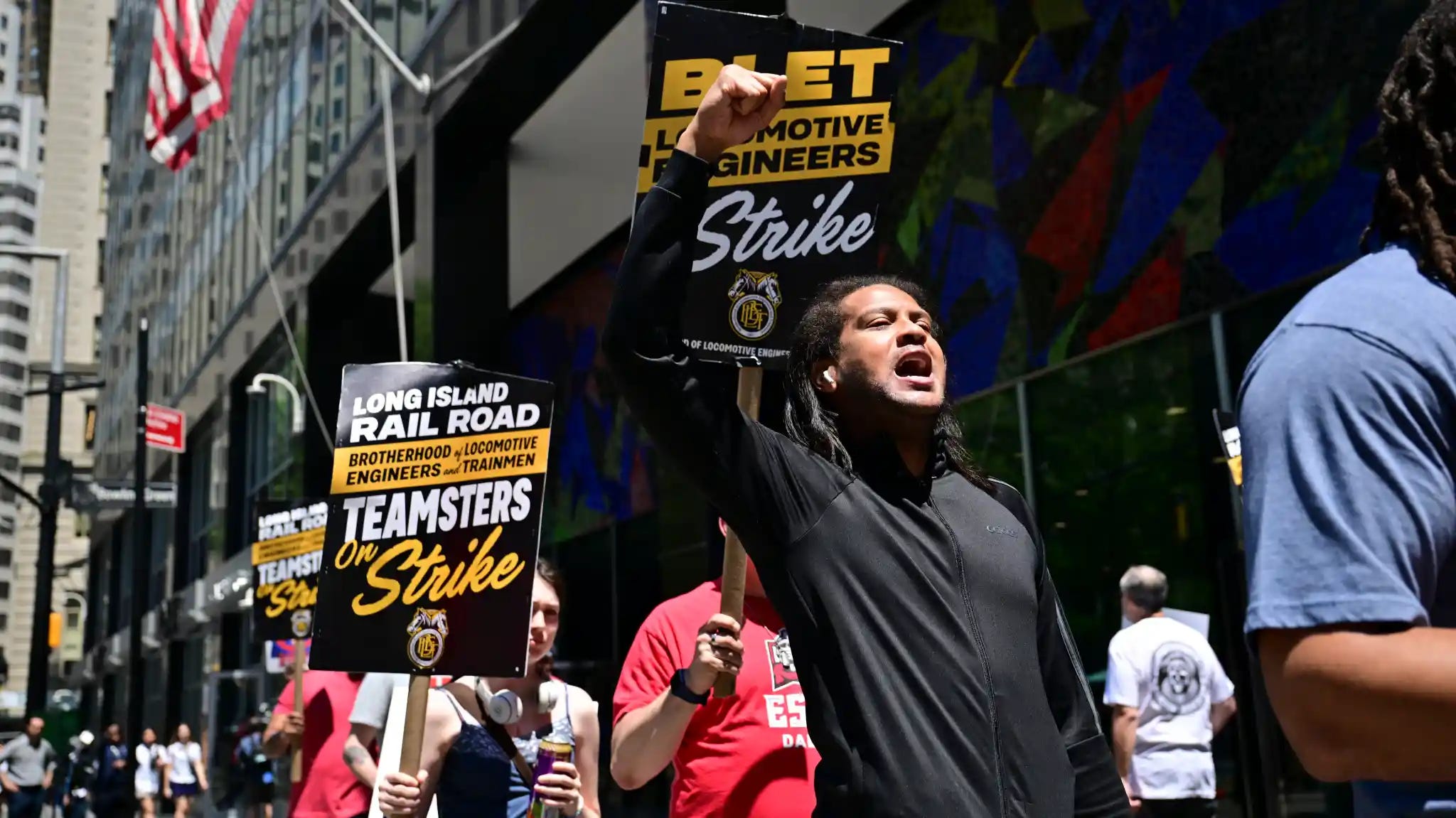
After shutting down the busiest commuter rail system in North America for three days, 3,500 Long Island Rail Road workers represented by a coalition of five unions won new contracts this week, ending the first strike on the railroad in 32 years. The strike disrupted travel for nearly 300,000 daily riders and forced New York political leaders to finally move after years of delays and stalled negotiations.
At the center of the fight were wages and cost of living. Workers had gone three years without raises while inflation and housing costs exploded across the region. The settlement reportedly includes retroactive raises, cost-of-living improvements, and stronger wage protections, largely bringing workers in line with gains won elsewhere in the MTA system.
The MTA operates under the governor’s office in NY, meaning Governor Kathy Hochul ultimately guides the MTA management team in negotiations. Before and during the strike, Hochul aggressively attacked workers, calling the walkout “reckless” and warning that meeting workers’ demands could mean higher taxes and fare hikes, while saying that LIRR workers were already highly paid.
Then, after workers won, the tone changed completely. Hochul suddenly praised the agreement for ensuring workers would be “paid fairly” – while quietly dropping earlier warnings about catastrophic fare hikes. Public sector workers across the board will recognize this dynamic where public servants are pitted against the public they serve, with fearmongering about higher taxes, prices, or cuts to services. Essentially saying the only way they can support essential public servants is by taking it out of the pockets of other working people. In the aftermath we can see this was just a bluff meant to undercut public support.
The strike also highlighted the unique power – and restrictions – of transportation workers. Rail and airline workers labor under the Railway Labor Act, a law designed to make strikes extremely difficult through endless mediation, cooling-off periods, and federal intervention. Workers still remember the 2022 national rail strike, when Congress and Biden blocked 115,000 rail workers from striking. Read more about this in our previous bulletin.
After three long years of negotiations and delays without a contract, LIRR workers won a major victory after just three days out on strike. Now another 40,000 MTA workers for the NYC subway system represented by TWU Local 100 continue their own negotiations following their own recent contract expiration. While these workers are much earlier on in the long and painstaking process of RLA negotiations, the powerful example set by the LIRR workers can serve as both inspiration for the workers and a serious threat to MTA management.
Postal workers prepare for contract fight as agreement expires
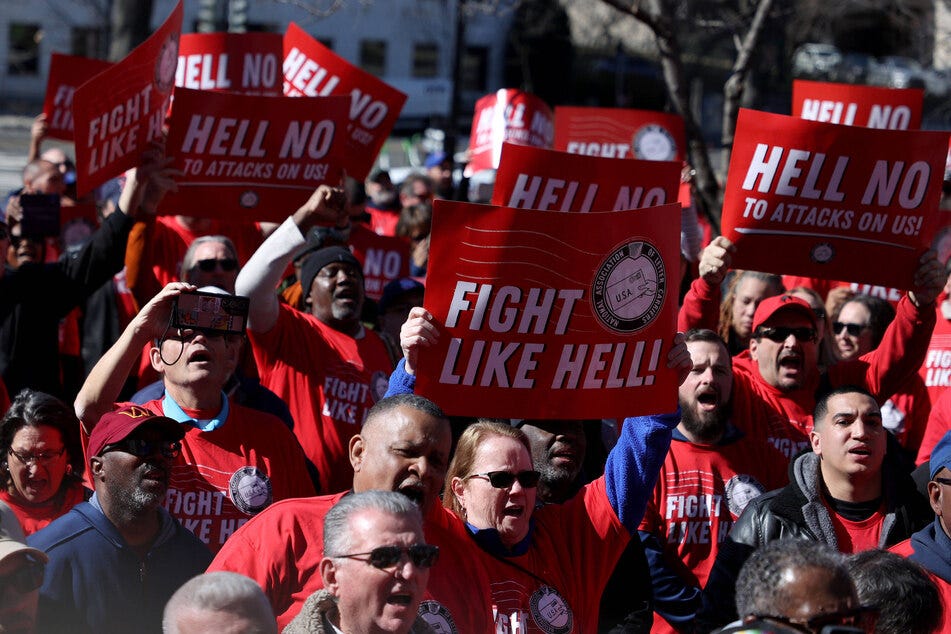
The contract covering more than 200,000 city letter carriers expired at midnight Friday, 5/22. Members of the National Association of Letter Carriers (NALC) have been bargaining under growing pressure over wages, staffing shortages, forced overtime, and the long-running two-tier workforce system that has left newer postal workers earning less and struggling to survive.
Over recent months, NALC members have organized rallies in more than 100 cities, preparing for bargaining and warning against threats of privatization and further erosion of one of the country’s oldest public services. Their core demands are “30 for 30” – calling for $30 / hour starting wages and 1 manager for every 30 workers.
Mike Pinto, a longtime letter carrier, said “When I started around twenty years ago it was one supervisor for every twenty carriers. Now it’s like one per seven. I think we could run the office without them. If none of them showed up we’d still run.” Carriers have seen management bureaucracy and budget expand dramatically at the same time that the Post Master General and Congress claim that they’re in a financial crisis.
The USPS remains one of the few truly universal public services in the country, reaching every address regardless of profitability. Yet workers say years of austerity, understaffing, and political attacks have weakened service while pushing employees toward burnout. NALC leaders have also repeatedly warned against efforts to privatize postal services, arguing it would mean higher prices, worse service, and more pressure on workers.
Chris Persampieri, a letter carrier with the Next Generation Carriers, explained how many postal workers see their fight to protect the public service from privatization. “Many people want a cheap public service. And Wall St, corporations, want a more expensive service so they can make that money for themselves. We have a clear message for them and for the public as well that the Post Office is not for sale.”
In 1970, postal workers launched a massive illegal wildcat strike, shutting down mail service nationwide and ultimately forcing major gains, including granting postal workers collective bargaining rights – despite federal law banning strikes for workers. These workers still do not have the legal right to strike, but the memory of 1970 still remains with the workforce today, especially as more postal workers feel pushed to their limit again.
BONUS ROUND
Bring it to the shop!
The Pickets & Power Bulletin covers the biggest stories impacting all working people today. Share these stories with your union siblings, coworkers, friends, and family. Read it together, discuss, and take lessons to strengthen your own fights. When we fight, we win – and when we fight, we learn. Tell us in the comments about campaigns you think we should include in our next bulletin!