


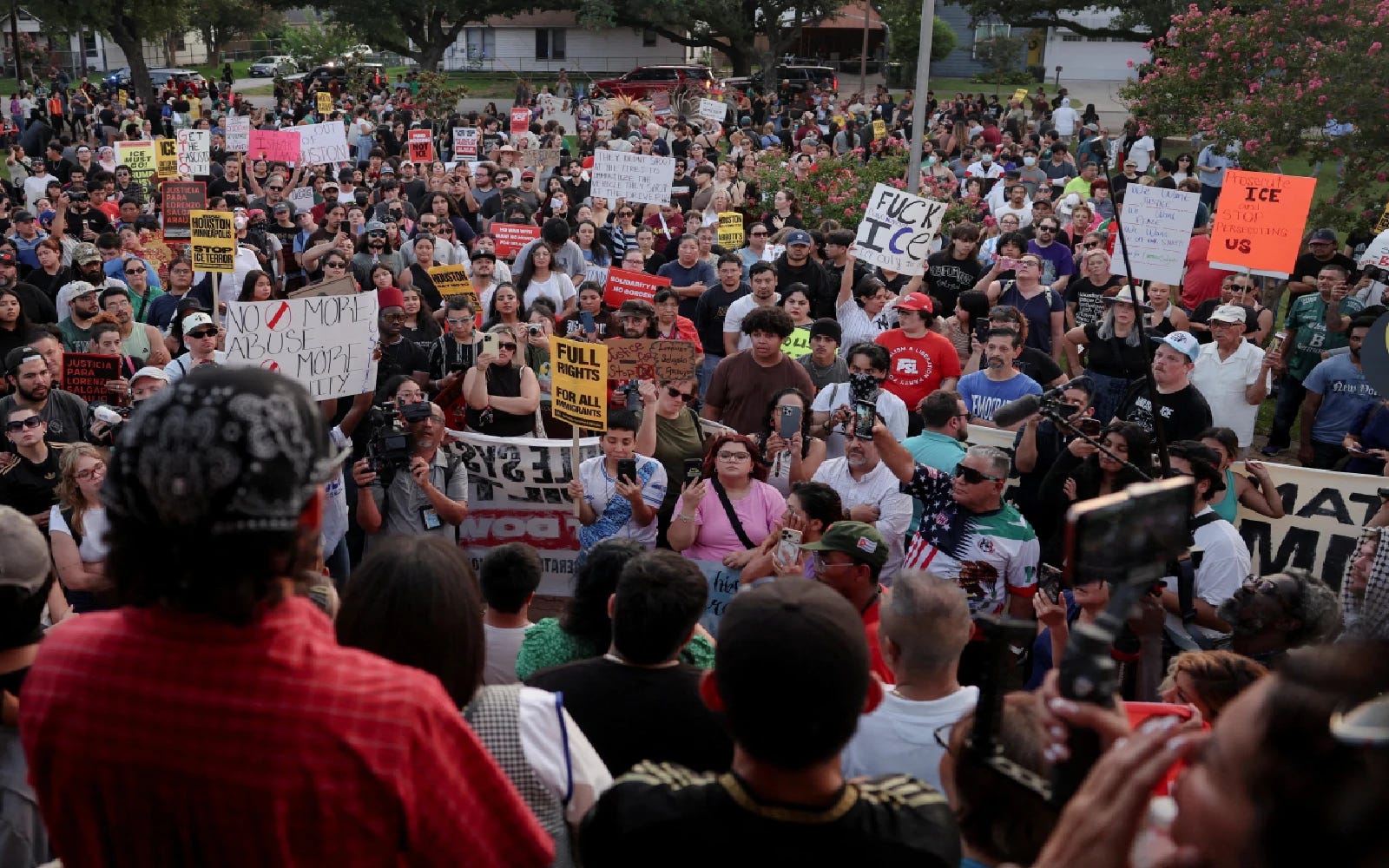
ICE agents commit string of murders from Texas to Maine
A string of deadly ICE encounters has sparked mass outrage across the country. On July 7, Lorenzo Salgado Araujo, a 52-year-old husband, father, and construction worker, was shot and killed by an ICE officer in Houston while driving to a job site with coworkers, including his brother. Federal officials have since acknowledged that he was not the intended target of the immigration operation. Less than a week later, Joan Sebastián Guerrero, a 25-year-old Colombian father, was shot and killed by an ICE officer near his home in Biddeford, Maine. He also was not the target of the operation. Then, in St. Augustine, Florida, a man fleeing an encounter with ICE agents was struck and killed by a tractor-trailer. In Georgia, Jesús Manuel Arenas-Silva, a 45-year-old Venezuelan man, died in ICE custody while being transferred between detention facilities after not receiving his medication.
These deaths are not isolated accidents. They are the predictable result of a deportation system that has been expanded, militarized, and unleashed against working-class immigrant communities. ICE has been rapidly expanding its workforce while the Trump administration pushes for record arrests and deportations. Internal data showed ICE arrests in Maine more than quadrupled in recent weeks. DHS Secretary Markwayne Mullin boasted that ICE is breaking arrest records “every single day.” In Texas, local police departments and sheriffs have increasingly been pulled into the dragnet through 287(g) agreements and other forms of collaboration, turning local law enforcement into an extension of ICE.
Houston has become one of the clearest examples. A new report found Houston police had cooperated with ICE more than 100 times since April, while advocates say HPD collaboration has helped make the city a hotspot for immigration enforcement. Texas has become one of the leading states for ICE arrests and deportations, driven in large part by state and local law enforcement acting as force multipliers for the federal crackdown.
In the face of all of this, communities are fighting back. In Houston, thousands have gathered in vigils and protests demanding justice for Lorenzo Salgado Araujo, an independent investigation, and an end to HPD collaboration with ICE. In Maine, the killing of Joan Sebastián Guerrero brought hundreds into the streets in Biddeford and Portland.
Earlier this year, after ICE killed Renée Nicole Good and Alex Pretti in Minnesota, unions and community groups helped organize mass shutdown actions, reviving the general strike tactic for the first time in decades. After that uprising, ICE withdrew from Minnesota soon after and appeared to pull back from some of the most visible “shock and awe” tactics, while continuing to expand through quieter methods: more arrests, more detention, more rule changes, more local police collaboration, and more surveillance.
Now the violence is again in the open. The labor movement should understand this fight clearly. ICE terror is a worker issue. Immigrant workers build cities, staff hospitals, clean hotels, harvest food, drive trucks, teach children, care for elders, and keep whole industries running. When ICE kills workers on their way to work, raids job sites, or turns local police into deportation agents, it is attacking the working class itself. The question now is whether labor will treat these killings as isolated tragedies, or as part of a broader attack that requires organized working-class resistance.
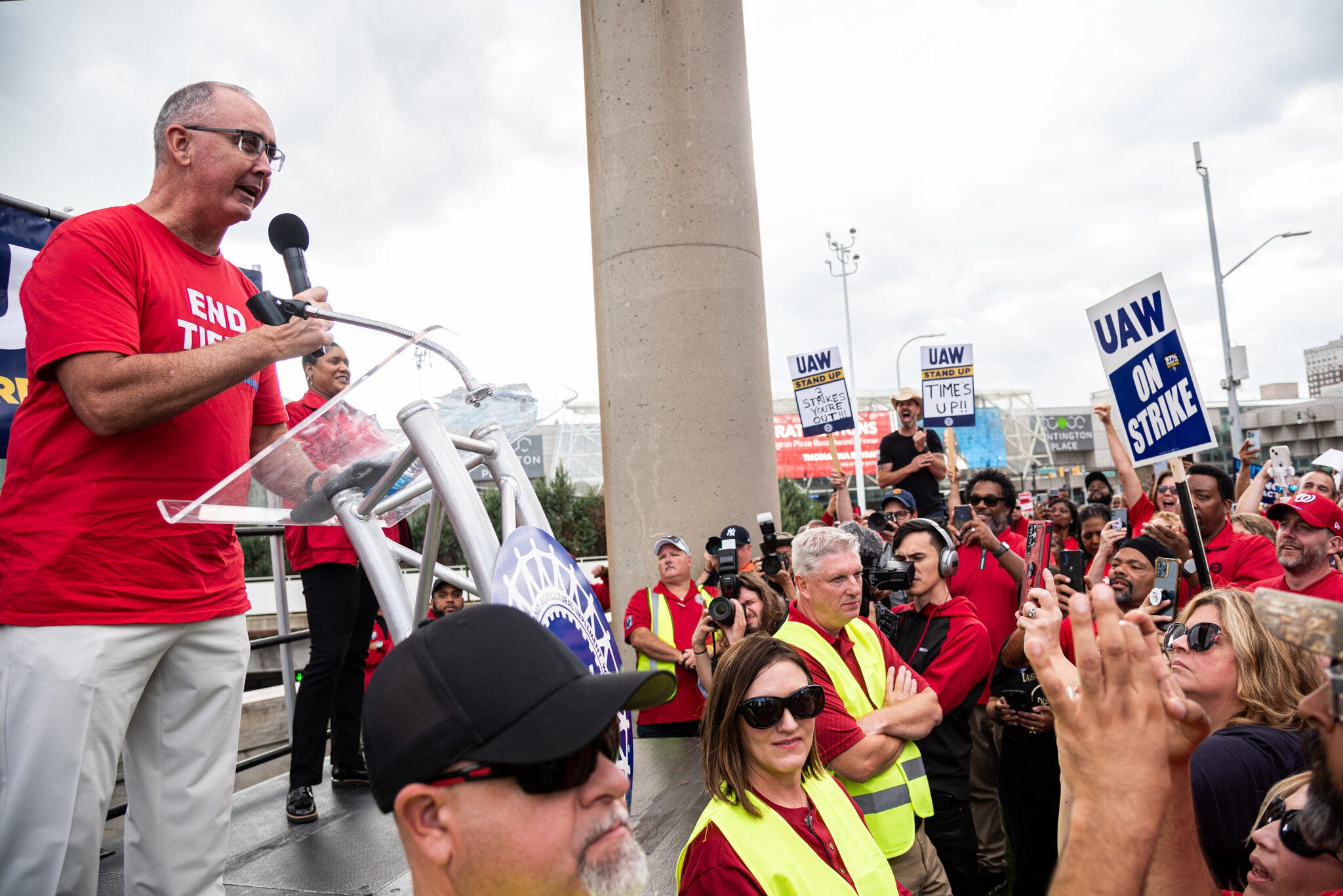
Federal investigation launches against UAW President Shawn Fain as election approaches
The Justice Department has launched a grand jury investigation into allegations involving UAW President Shawn Fain, escalating a long-running conflict between Fain, UAW Vice President Rich Boyer, and court-appointed federal monitor Neil Barofsky.
The investigation grows out of allegations detailed in the monitor’s reports. Barofsky’s office has accused Fain of improperly pressuring Boyer to support bonuses for workers at a Stellantis-UAW training center, where Fain’s fiancée worked, and retaliating against Boyer after he objected. Fain denies the allegations and has called them bogus. No charges have been filed, and a lawyer for the UAW has said the union itself is not the subject of the grand jury investigation.
The timing of Barofsky’s report and the launch of the federal investigation raise serious questions. Fain is campaigning for another term as UAW president, and Boyer is running against him. The monitor’s latest report and the news of the federal investigation come as UAW members prepare to vote in a contested leadership election. The allegations have circulated for roughly two years, but their escalation now could shape the political terrain of the race.
This is not happening in a vacuum and Barofsky has been far from a neutral observer of the UAW’s internal political life. The UAW was placed under federal oversight after corruption scandals involving former leadership. Members responded by winning direct elections for the union’s top officers for the first time. In 2023, they elected Fain and a reform slate promising to break with decades of concessions, take on the Big Three, organize the nonunion South, and rebuild power on the shop floor.
That leadership then led the Stand Up Strike, winning major contract gains at Ford, General Motors, and Stellantis. The union followed with a historic win at Volkswagen in Chattanooga and a broader campaign to organize nonunion auto plants, especially across the South. Fain has also called for unions to align major contracts around May 1, 2028, raising the idea of coordinated strike action across industries. That record has made Fain one of the most visible labor leaders in the country. It has also made the fight over the UAW’s future more significant.
Barofsky’s role was supposed to be narrow: investigate corruption and enforce the consent decree. But UAW leaders and supporters argue his office has increasingly inserted itself into staffing decisions, internal disputes, political conflicts, and now the election for UAW president.
The political conflict escalated after the UAW called for a ceasefire in Gaza. Before Fain was set to speak at a Capitol Hill ceasefire press conference, Barofsky called him and urged him to reconsider. He later forwarded the union a complaint from the Anti-Defamation League about a UAW local’s ceasefire position, even while acknowledging that the issue was outside his jurisdiction. The UAW refused to back down. Delegates have since voted to divest the union’s investments from Israeli bonds.
Now the monitor’s allegations have become the basis for a federal grand jury investigation. The monitor’s expanding role, his intervention over the union’s anti-war politics, and the timing of this investigation during a contested election deserve scrutiny. What is clear is that the future of the UAW should be decided by its members – the workers who struck the Big Three, changed their union through direct elections, and are organizing the next wave of autoworkers – not by the federal monitor.
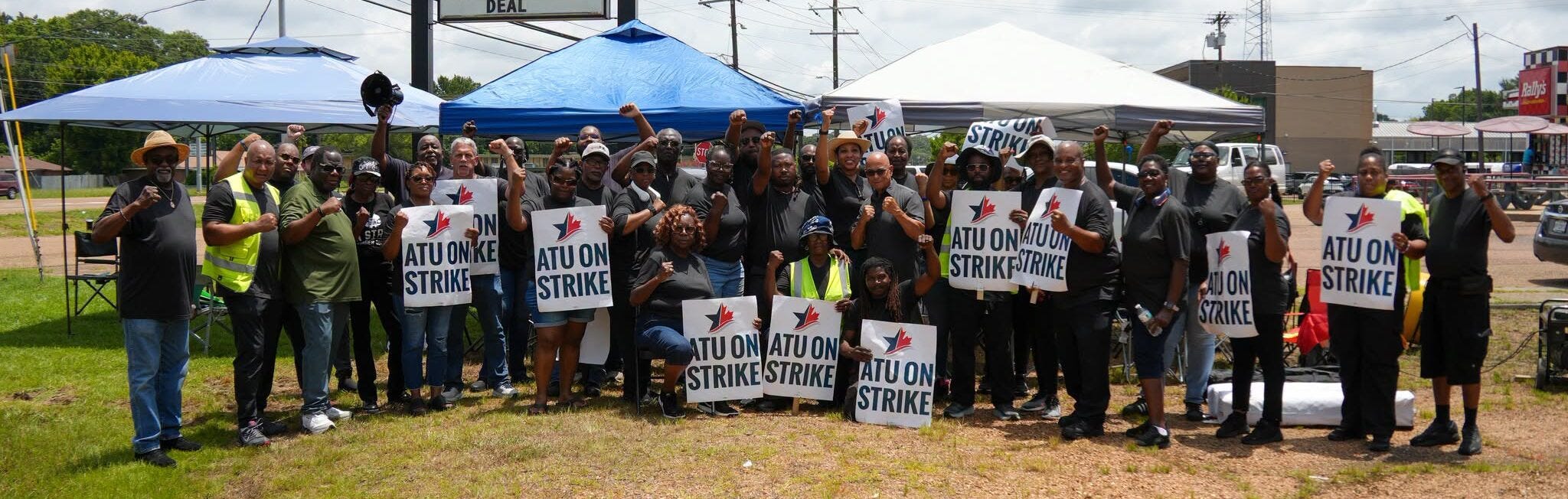
Jackson transit workers strike against austerity and privatization
Transit workers in Jackson, Mississippi went on strike this week after contract talks broke down between ATU Local 1208 and MV Transportation, the private company contracted to operate JTRAN.
JTRAN is a publicly funded bus system, but its workers are employed by MV Transportation, a Texas-based private contractor and one of the largest privately owned transportation companies in the country. The arrangement reflects a familiar model of public-service privatization: the city remains politically responsible for the service, but private management controls the workforce.
MV Transportation has proposed changes to the system that include new safety policies, greater use of on-demand “microtransit”, and the ability to hire drivers without commercial licenses to operate smaller vehicles. Workers and riders have also raised alarms over proposals from management that would cut routes, shorten service hours, eliminate Saturday service, and further weaken a system that low-income and disabled residents depend on. This is the second JTRAN strike in two years. Workers previously struck for 14 days in September 2024.
MV Transportation has begun bringing in out-of-state drivers to resume limited service. The union has criticized that move as dangerous, especially as the city waives some requirements for drivers during the strike. If public transit is treated as a low-cost contract to be managed by private companies, workers lose, riders lose, and the public good erodes. Jackson transit workers are fighting over whether public transportation will be a reliable service for the people who need it, or another public good gutted through privatization and austerity.
BONUS ROUND
Bring it to the shop!
The Pickets & Power Bulletin covers the biggest stories impacting all working people today. Share these stories with your union siblings, coworkers, friends, and family. Read it together, discuss, and take lessons to strengthen your own fights. When we fight, we win – and when we fight, we learn. Tell us in the comments about campaigns you think we should include in our next bulletin!