


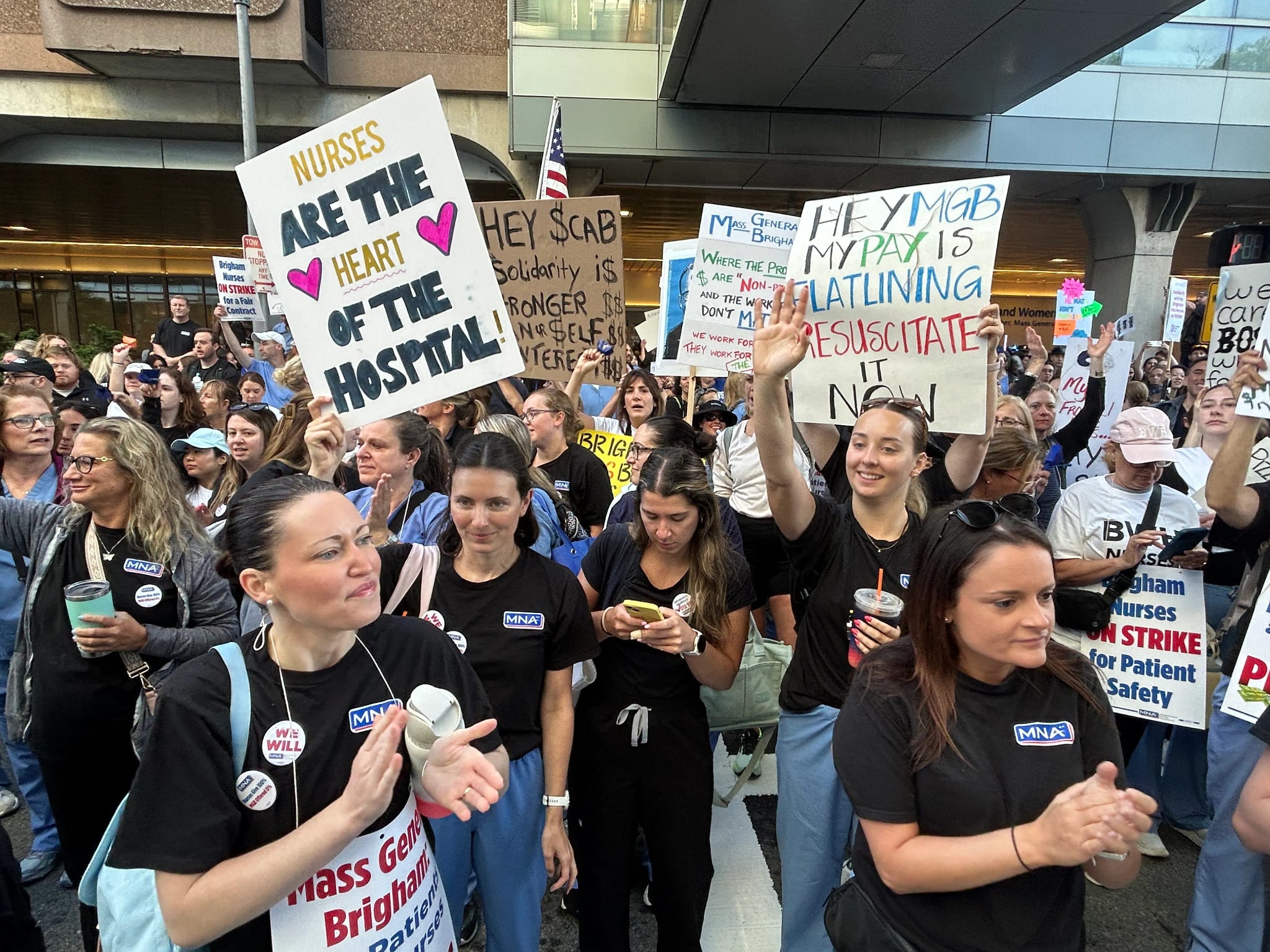
Brigham nurses launch largest healthcare strike in Massachusetts history
More than 4,000 nurses at Brigham and Women’s Hospital walked out this week, joined by 450 Mass General Brigham Home Care clinicians, launching what the Massachusetts Nurses Association called the largest nurse and healthcare professional strike in state history. Brigham nurses held a one-day strike, while MGB Home Care clinicians began a seven-day strike for their first contract. Brigham management then locked out nurses for four additional days, extending the work stoppage through July 13.
The core issues are wages, health insurance costs, permanent staffing, and respect for frontline nurses who say the hospital has refused to invest in the workforce needed to provide safe patient care. Brigham nurses say the hospital offered no real cost-of-living raise beyond the existing step system and proposed shifting more healthcare costs onto them. “During COVID we were the heroes,” operating room nurse Peter Sztramski told WBUR. “Now they offer us zero. Unacceptable.”
The Mass General Brigham board is stacked with figures from private equity, venture capital, investment management, and billion-dollar corporations, including Josh Kraft – son of billionaire Robert Kraft. MGB reportedly has $35.8 billion in assets and $2.4 billion in net gains last year, while telling nurses they deserve nothing to keep pace with the cost of living. MGB CEO Anne Klibanski made $8.4 million in 2024.
Brigham’s response has been to praise the scab nurses brought in during the strike. To nurses who spent years carrying the hospital through COVID, staffing shortages, and dangerous workloads, their praise for scabs was a huge insult– especially when the hospital used those replacement contracts as justification for locking out its own nurses for days after their one-day strike ended. The issue touches yet another sore spot as Brigham has turned to traveling nurses to alleviate burn out and retention issues instead of paying permanent nurses a fair wage or improving ratios and safety.
Meanwhile, NNU affiliated nurses in Wichita and Baltimore held one day strikes this week as well. On July 6, NNU nurses in Wichita held a one-day strike at Ascension Via Christi St. Francis and St. Joseph over patient safety and workplace violence protections after a fatal shooting outside the St. Joseph emergency department. That same day, nurses at Ascension Saint Agnes Hospital in Baltimore held a one-day strike over staffing, retention, and patient safety after management cut staff hours while Ascension reported over $900 million in net profit.
The broader healthcare system is buckling under pressures that hospitals and politicians refuse to address. ACA marketplace premiums rose sharply in 2026 after enhanced subsidies expired, with Reuters reporting premiums rose 58%, deductibles increased by about $1,000 per person, and enrollment fell 13% from 2025 to 2026. As coverage gets more expensive, patients delay care, come into hospitals sicker, and put even more strain on nurses already working in understaffed units.
That is the cycle nurses are striking against: executives squeeze staffing and shift costs onto workers while patients face rising costs and delayed care. Nurses are left to absorb all of those failures at the bedside. This is why healthcare workers continue to strike in waves – not because they want to leave patients, but because the system is already failing them.
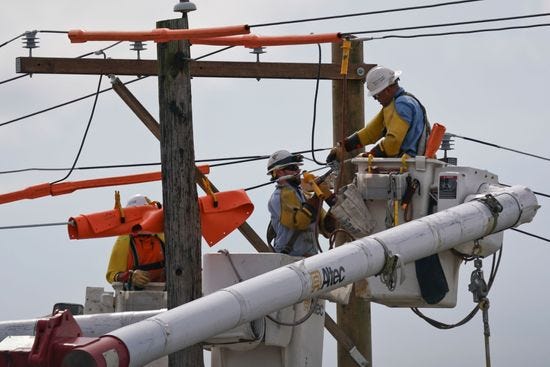
PECO workers win after July 4 strike and widespread outages
IBEW Local 614 ended its historic three-day strike against PECO this week after reaching a TA with the Philadelphia-area utility. The strike began at midnight on July 4, marking the first strike in PECO’s 145-year history. The 1,600-member bargaining unit includes linemen, gas technicians, mechanics, call center workers, and back-office employees who maintain the electric and gas systems across southeastern Pennsylvania.
The agreement includes wage increases, cash-balance pension plans, full retirement medical coverage, improved rules around medical certifications, 24-hour notice for mandatory overtime in the call center, and doubled upgrade pay for workers doing duties outside their regular job classifications. PECO workers were paid as much as 30% below comparable utility workers, while PECO’s profits jumped nearly 50% after rate hikes driven by their monopoly over regional utilities.
The timing gave workers major leverage. The strike began during Philadelphia’s America 250 celebrations and continued through severe storms and widespread power outages with nearly 60,000 reportedly losing power with slow response times from scabs. PECO workers keep the lights on through heat waves, storms, holidays, and national celebrations. When they struck, the company and the public saw how quickly the system depends on their labor. They walked out on July 4 and came back with a contract that restored benefits, raised standards, and forced the company to move.
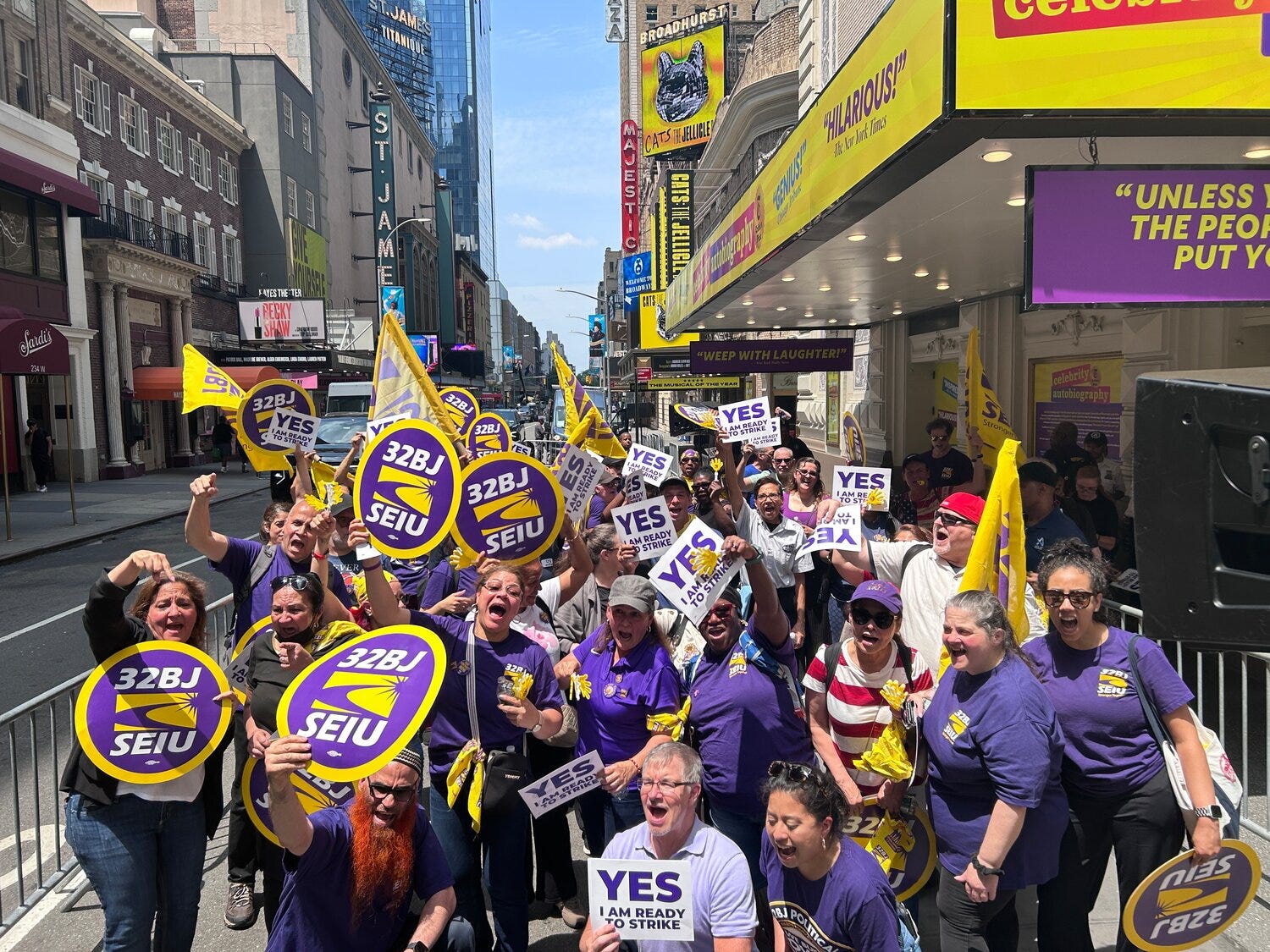
Broadway cleaners win contract under strike threat
Broadway cleaners with 32BJ SEIU reached a TA with the Broadway League this week, averting a strike that could have affected 30 theaters across the district. The contract covers about 250 cleaners working in theaters operated by ATG, Nederlander, Shubert, and Circle in the Square, including workers who clean venues hosting productions like Chicago, Aladdin, Schmigadoon, and Cats: The Jellicle Ball.
The four-year contract includes $5 per hour in wage increases, totaling a 21% raise by the end of the contract, along with pension improvements, continued fully employer-paid family healthcare, expanded paid leave, better working conditions, Juneteenth as a paid holiday, and stronger anti-discrimination protections. The deal still needs ratification, but it comes after Broadway cleaners held their first strike authorization vote in 18 years.
The victory comes during a record-breaking Broadway season. The Broadway League reported that the 2025–2026 season grossed $1.91 billion, sold 14.6 million tickets, and filled 90.8% of available seats. Workers who clean theaters after those massive crowds leave used that boom to demand their share. Broadway is built on spectacle, tourism, and ticket prices that can stretch into the hundreds of dollars a seat. But none of it runs without the cleaners, porters, matrons, restroom attendants, custodians, and building service workers who keep the theaters functioning.
BONUS ROUND
Bring it to the shop!
The Pickets & Power Bulletin covers the biggest stories impacting all working people today. Share these stories with your union siblings, coworkers, friends, and family. Read it together, discuss, and take lessons to strengthen your own fights. When we fight, we win – and when we fight, we learn. Tell us in the comments about campaigns you think we should include in our next bulletin!