


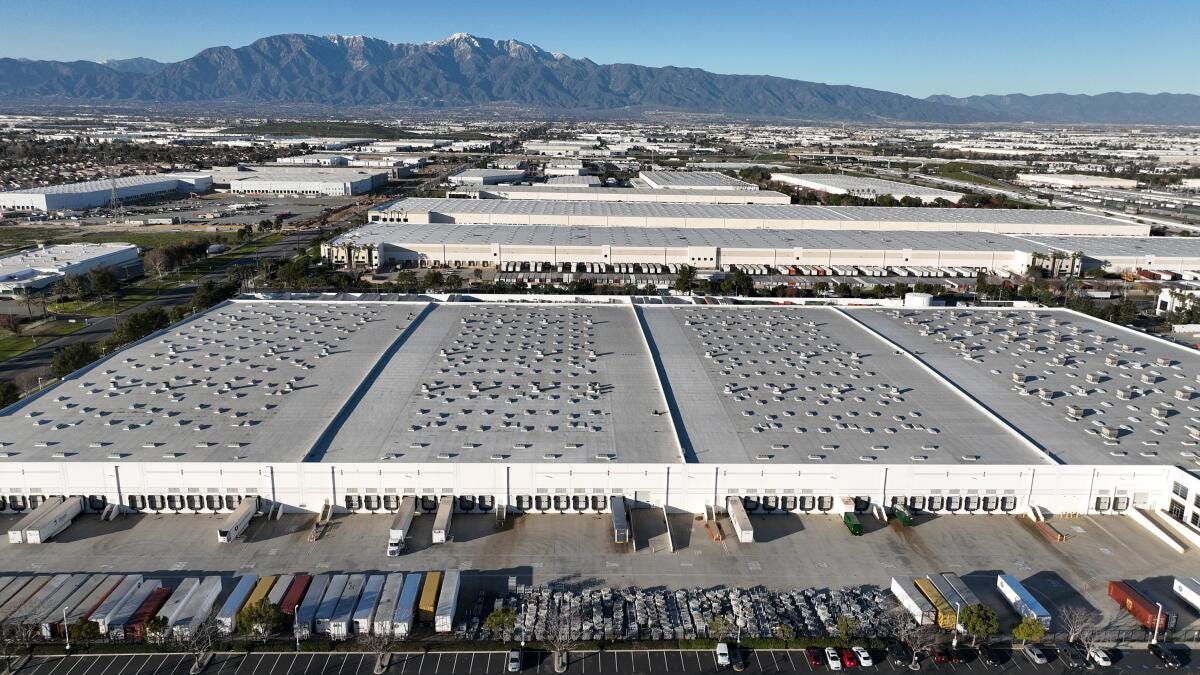
The Inland Empire – a region east of Los Angeles – has become the warehouse capital of the United States. Nearly everything entering through the ports of LA and Long Beach moves through the region before being distributed across the country. Over the past two decades, Amazon and other logistics giants have transformed the area into a sprawling logistics hub built on warehouses, truck traffic, and low-wage labor.
On the Line spoke with Sam Padilla, an Amazon worker at the DJT6 facility in Riverside and an organizer with Amazon Teamsters, about growing up in the Inland Empire, organizing inside Amazon, and why he believes the fight has to become something bigger than a traditional union campaign. The following has been edited for clarity and length.
Jeff Rosenberg [JR]: For people outside Southern California who may not know much about the Inland Empire, what is this region and why has it become so central to Amazon and logistics in general?
Sam Padilla [SP]: The Inland Empire is basically the logistics hub of the country now. Everything comes through the ports in LA and Long Beach and then gets moved out here before it’s shipped across the country. The Inland Empire used to have a lot more industry, especially with the defense industry and military. When those jobs started to shut down and move elsewhere, a lot of people started losing their jobs. It was the logistics industry that moved in next.
Companies realized there was a huge amount of cheap land out here where they could build massive warehouses, and there’s also a huge working class population – many people out of work – including a lot of people that got pushed further east because people couldn’t afford LA anymore.
So now entire cities out here revolve around warehouses, trucking, and logistics. Everybody either works in a warehouse, drives trucks, or knows somebody who does. That became the economy.
JR: You grew up watching that transformation happen in real time. What was that like?
SP: Yeah. My dad was a truck driver. I remember seeing the industry start changing in the 2000s and 2010s. A lot of trucking jobs became less stable. Companies started squeezing workers harder and harder. Independent truckers got pushed out because these corporations wanted cheaper labor and tighter control over everything.
Eventually my dad ended up back in warehouses because trucking stopped being sustainable. But warehouse work was even worse – harder labor, lower pay, no real future. That’s what happened to a lot of families out here. Warehouses became one of the only options if you didn’t have a degree.
At the same time, you could see the landscape of the region changing. They were demolishing homes and flattening neighborhoods to build warehouse after warehouse. Places that used to be open land or parks are industrial zones now. There are literally houses that refused to sell to these companies now standing surrounded by giant warehouses on all sides.
And the crazy thing is they always sell it as “development” or “bringing jobs,” but the communities absorb all the costs – pollution, traffic, noise, respiratory problems – while workers still struggle to survive.
Amazon and these companies generate billions out here, but workers don’t see that wealth. People are working nonstop just to survive. And the work itself breaks people down physically. That’s one of the first things that hit me when I started at Amazon.
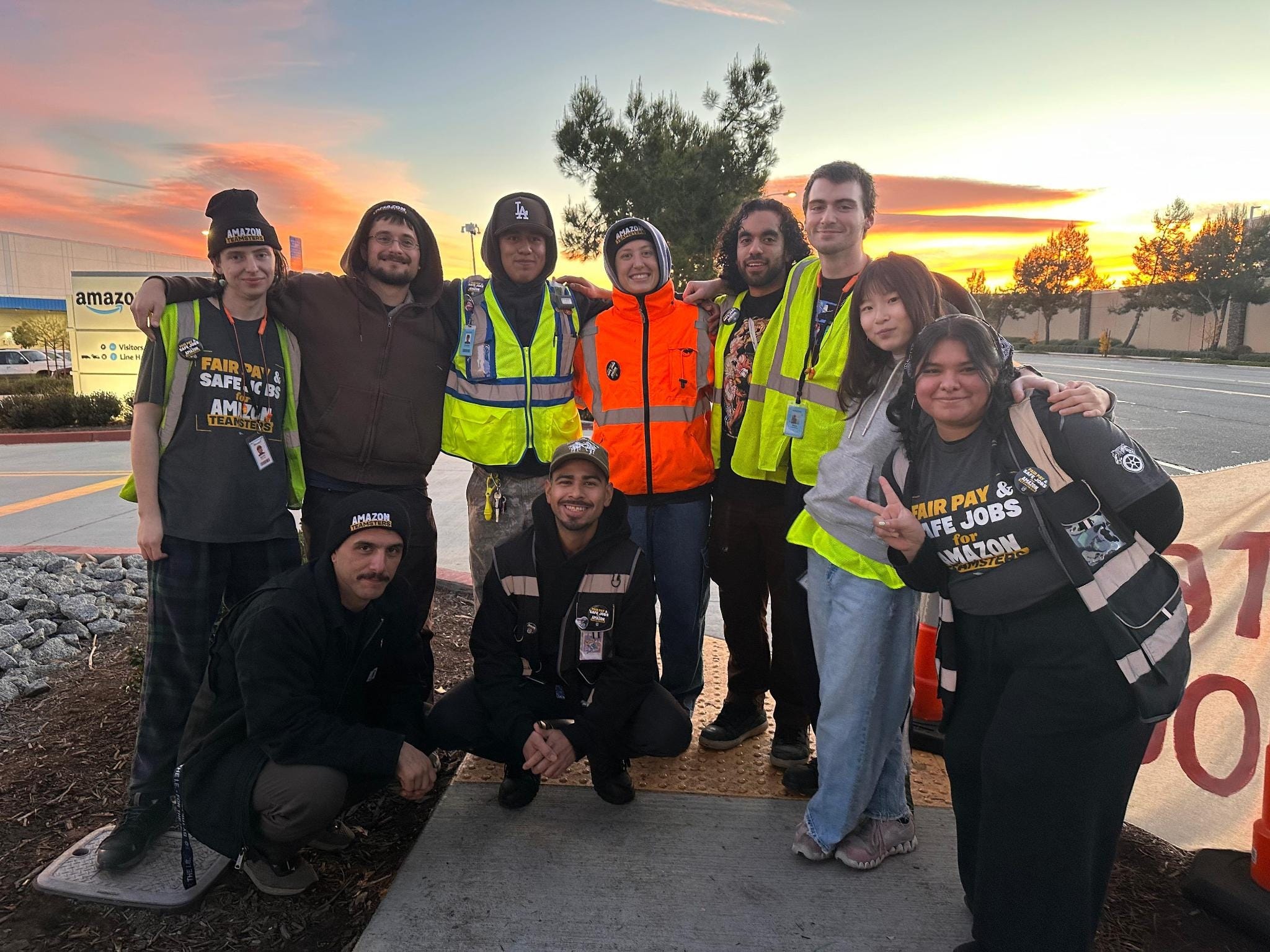
JR: What was that experience like when you first started working there?
SP: Honestly, the pace shocked me. Before Amazon I worked at a grocery store. Even when it was busy, there were moments where things slowed down. Amazon never slows down. It’s thousands of packages constantly coming at you for hours and hours. Even at the end of the shift there’s always more work. They push people nonstop to maintain rate and move faster.
And it’s not just physically exhausting. It takes over your whole life. A lot of the shifts are overnight or super early morning. People work overtime constantly because they need the money, but then you basically only have enough time to work, eat, sleep, and recover before doing it all over again.
I had a coworker trying to decide between shifts because one gave him more hours, but another would at least let him occasionally see his kid. He told me his son was asking, “Where’s my dad? I miss him because he’s always at work.” That’s the reality for a lot of workers there.
JR: People online sometimes act like warehouse workers are just complaining about moving boxes, but what they don’t understand is the level of pressure and control Amazon imposes. What goes through your mind when you see those kind of comments online?
SP: Yeah. It’s not just “moving boxes.” It’s the pace they force on you. It’s the surveillance. It’s constantly feeling like somebody’s breathing down your neck. Even when I first started, managers would come tell workers not to talk while working. You’re standing shoulder to shoulder with people for ten hours but they want complete control over every second.
There’s always this fear that if you slow down too much or miss rate or do something wrong, you’ll get disciplined or fired. And people burn out fast because of it. You see workers come in and disappear after a few weeks all the time. Amazon’s turnover is insane because the company treats people as disposable.
JR: You didn’t go into Amazon planning to become an organizer though. What made you decide to join the union?
SP: I was going to school studying psychology because I wanted to help people. Growing up in the Inland Empire, you start seeing the bigger picture. You see how corporations reshape communities. You see poverty, stress, displacement, people working nonstop and still struggling.
And eventually you realize you can’t solve those problems individually. You can’t “medicate poverty.” I started getting more politically involved and learning more about labor organizing. Then Teamsters and Amazon delivery drivers organized a picket outside my warehouse during the UPS contract fight.
Amazon tried diverting workers away from the picket line so nobody would interact with it. But instead of clocking in, I joined the picket. That was basically the beginning.
JR: Everyone in the labor movement and beyond knows Amazon is one of the most aggressively anti-union companies in the world. What did the union busting look like inside your facility?
SP: It’s constant. They put anti-union propaganda everywhere – TVs in the breakroom, flyers in the bathrooms, mandatory meetings where managers talk against organizing. They also bring in these “employee relations” people who pretend they’re just there to hear worker concerns.
It was ridiculous, when you think about it. Some of these people were getting paid $3,000 a day to go around to try to convince us as Amazon workers that we don’t deserve $30 an hour. Even worse, that the people saying we do deserve that are actually hurting us or trying to trick us.
Before we went public, they’d come around asking what we wanted changed at work or whether people were talking about unions. They were fishing for information. Then after organizing became public, suddenly management starts pretending they care about every complaint workers have ever had.
That’s how we knew the organizing was working. The issues workers raised before suddenly matter because now the company sees workers organizing collectively to change it, and they were afraid it could really catch on.
JR: One thing that stands out in talking to you is that you don’t view this as just a workplace campaign over wages and benefits, but see yourself as part of a bigger fight against corporate power.
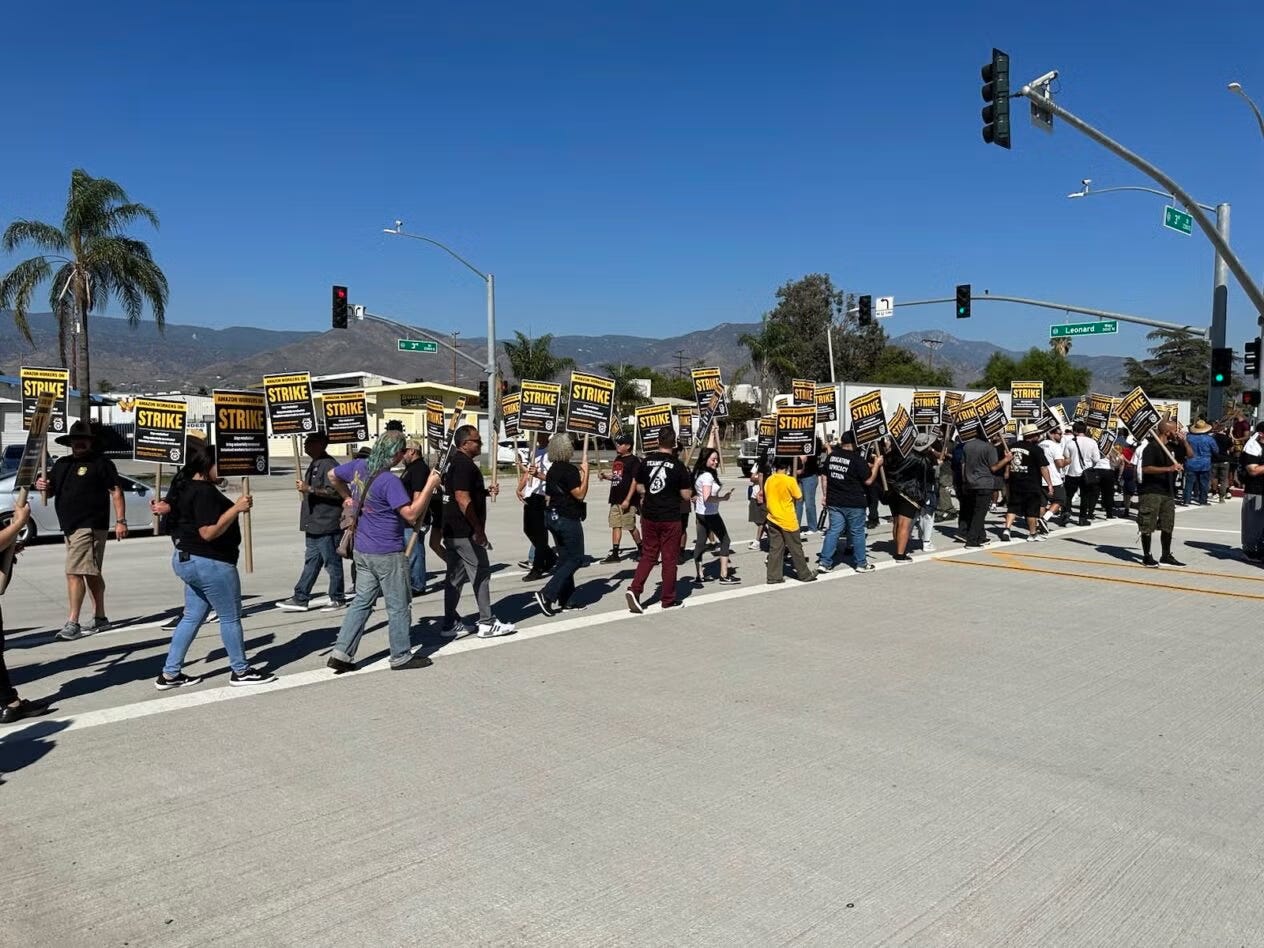
SP: Exactly. The organizing drive can’t just be about the classic “union difference,” just in terms of the check or benefits. Don’t get me wrong – that kind of message is important too and can mean a lot for workers like us who are struggling to survive. People joke all the time that with inflation, living in the Inland Empire means trying to make San Bernardino wages cover LA cost of living, and they aren’t far off. But I keep finding in my conversations that it needs to be bigger than just this.
Amazon is too massive to approach like other union drives. These corporations shape entire communities and entire economies. So organizing Amazon has to become bigger than just “we deserve a raise.” This is a long fight and the truth of it is that we are going to need a massive movement across the company to have the power to win life-changing wins. That won’t come quickly, and so we need people to know they are fighting as part of a bigger movement across Amazon.
Obviously wages matter. Safety matters. But people’s lives go beyond the warehouse. My co-workers care about housing, immigration raids, healthcare cuts, endless wars, pollution, and their families. Whether they ever have free time or a future outside work.
And if organizing ignores those things, people won’t truly believe it represents them. That’s why we bring broader political issues into organizing conversations. Not to be divisive or argue with our coworkers. The opposite actually. It’s about understanding what workers are actually living through.
JR: There’s often this argument that unions should avoid politics in order to stay “united,” especially in new organizing campaigns.
SP: I think that’s a losing strategy. Trying to dodge the issues many people are thinking about most just makes us seem isolated, like we are blind to what they are seeing.
For example, there are tons of Latino workers in the Inland Empire. ICE raids and deportations affect people directly. Why would workers trust an organization that ignores that reality? What if instead they know we’re an organization that is fighting to defend them and their communities?
Or if workers are struggling because rent is insane, because they never see their families, because they’re scared about healthcare or war or police violence – why would we pretend those things don’t matter?
The point isn’t to force ideology onto people. The point is to connect organizing to real life, and not shy away from any part of their lives that really matters to them. When workers start understanding the power they have collectively, they also start imagining bigger possibilities and what they can fight for.
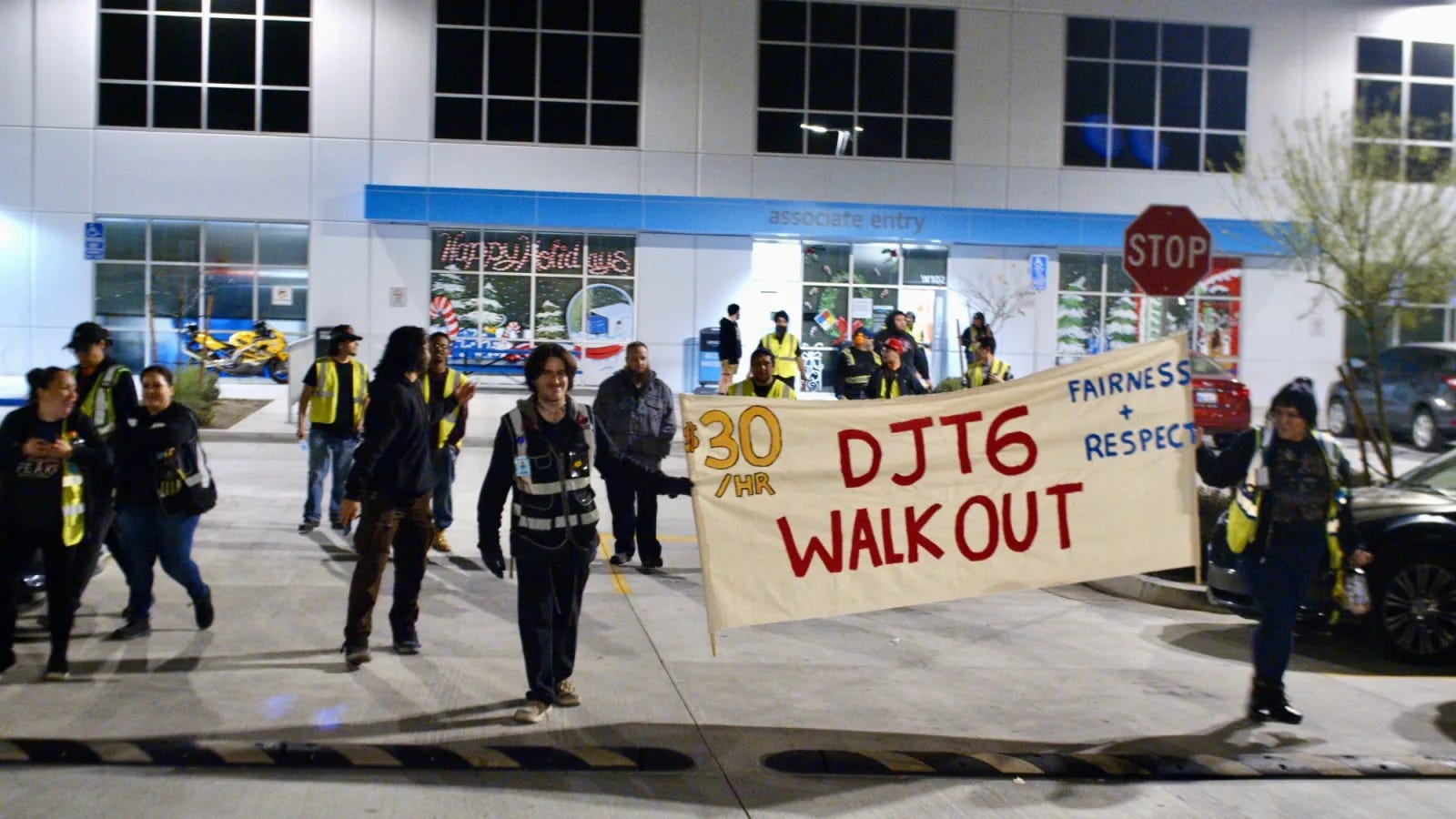
Like what if workers had enough power to reshape the community instead of corporations deciding everything? What if in the Inland Empire we built parks again instead of just endless warehouses? Affordable housing instead of more luxury development? What if workers had enough free time to actually live life? Or if we could finally make corporations like Amazon pay their fair share to support the communities that made them a multi-trillion dollar company?
That’s the vision. The vision is to change the world around us, not just change the inside of the warehouse. Amazon has shaped our lives and has our whole community and political system under their thumb. Organizing working people is the only way to change that.
JR: Are there any stories you can share about what this has looked like to bring your coworkers into the fight by connecting with them on broader political issues?
SP: Yeah. I’ve brought coworkers to anti-ICE protests and anti-war rallies in LA and even out here in the IE. And honestly, for many people seeing those kinds of mobilizations can give people a new sense of confidence and energy to organize and fight.
A lot of workers feel isolated. Work takes over their whole life. So when they see community and solidarity in action, it reminds them that people actually do have power when we come together. Then they start thinking differently about the workplace too. They realize: if people can organize out here, why can’t we organize at work too?
I’ve been able to reach coworkers like that who told me time and time again that they didn’t want to hear about the union. Sometimes they talked about bad experiences with unions in the past or skepticism and hopelessness about anything ever changing. Whatever it was that was holding them back, connecting with them in other ways opened the door.
It’s not just about making a couple more dollars an hour. It’s about building enough collective power to fight for a completely different quality of life. And that’s why this fight matters so much to me and my coworkers.
Thanks for this inspiring interview on hump day! I cannot be the only reader who sees a little irony in the name of the logistics centre. DJT6 contains the initials of a certain politician...